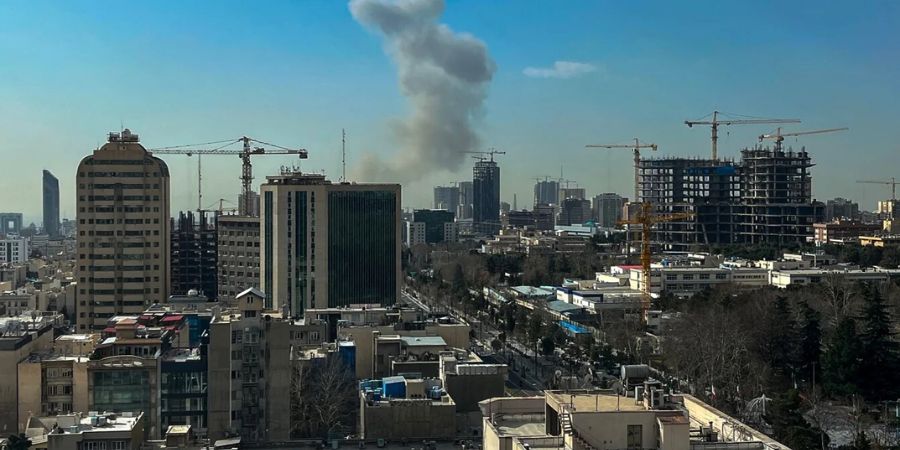
The United States and Israel decided to attack Iran because negotiations failed to stop Iran’s nuclear and missile programs, they believed military action was the only way to prevent a future strategic threat, and they were responding to years of rising tensions and hostile moves on both sides. The immediate trigger was the breakdown in talks and the decision by leaders in Washington and Jerusalem that pre-emptive force was necessary.
This is the biggest Iran war news in decades, and it is still unfolding.
Key Points:
- The US and Israel launched coordinated airstrikes on Iran targeting missile systems, naval bases, and military infrastructure.
- President Trump confirmed “major combat operations” are underway, saying Iran cannot be allowed nuclear weapons.
- Iran retaliated within hours, firing ballistic missiles and drones toward Israel and shutting down its own airspace.
- Oil prices spiked and global markets reacted immediately as the Strait of Hormuz came under threat.
- Military analysts warn the conflict could spread across multiple fronts through Iran’s proxy network in Lebanon, Yemen, and Iraq.
Why It Came to This
The US and Iran have been hostile since 1979, when Iranian students stormed the American embassy in Tehran and held 52 diplomats hostage for 444 days. That event set the tone for everything that followed, sanctions, proxy wars, nuclear standoffs, and the occasional near-miss that somehow didn’t become a shooting war.
The 2015 nuclear deal briefly changed the trajectory. But when Trump pulled out of it in 2018, Iran restarted its uranium enrichment program with fewer limits. By 2025, Iran was operating advanced centrifuges and had enough enriched uranium to build multiple nuclear weapons, if it chose to weaponize.
Talks resumed in Oman in 2025, quietly, through intermediaries. They collapsed. Trump’s frustration became public. US intelligence pointed to Iran crossing a threshold on enrichment. And when warnings produced no response, Washington and Jerusalem moved from pressure to action. The latest Iran US news confirmed what many feared was coming.
What Happened
- The strikes hit multiple locations. Israeli jets struck missile production facilities, bunkers, and air defense sites across Iran. US warships and aircraft, already repositioned into the region in the weeks before, hit naval infrastructure and command centers. The US side of the operation was called Epic Fury. Israel ran Shield of Judah and Roaring Lion. The Israel attack Iran was coordinated, layered, and significantly larger than any previous Israeli strike on Iranian soil.
- Trump confirmed it publicly. He released a video saying the goal was to “defend the American people” by neutralizing the threat from Iran’s regime and stopping the country from ever reaching nuclear capability. He urged Iranian forces to surrender. The language was blunt and deliberate, this was designed to sound like a final decision, not an opening move in a negotiation.
- Israel declared a state of emergency. The Israeli government described the operation as preemptive and necessary. Defense officials said the alternative, waiting for Iran to complete a nuclear weapon, was not acceptable. Bomb shelters opened across Tel Aviv and beyond. Military reserves were called up.
- Iran hit back fast. Within hours of the US attacks on Iran, Iranian ballistic missiles and drone swarms were launched toward Israel. Iron Dome and David’s Sling intercepted a large number of them. Some got through. Flightradar24 showed commercial aircraft rerouting across the entire region in real time. Iran shut down its own airspace and cut internet access inside the country.
What Iran is Saying
Iran’s government did not acknowledge the strikes as a military setback. Khamenei and senior IRGC commanders framed the attack as an act of cowardice and promised retaliation that would force the US and Israel to regret their decision. Iran war news coming out of Tehran was tightly controlled from the start.
The Iranian government shut down airspace, restricted communications, and moved to control the information reaching its own citizens. State media described the country as unified and resolute. Whether that framing reflects reality inside Iran is harder to know when outside access is restricted.
The IRGC has a network of allied groups across the region, Hezbollah in Lebanon, the Houthis in Yemen, militia factions in Iraq and Syria, and all of them have signaled they are ready to act. That network is Iran’s way of spreading the cost of this conflict beyond its own borders.
The Military Picture
This operation was designed to degrade, not just damage. The sequencing of strikes suggests careful planning, hit air defenses first, then go deeper. US assets in the region had been building up for weeks, which analysts noted publicly but governments declined to confirm. It was the most significant US Iran war engagement in the Middle East since the Iraq War era.
Iran’s military is not small. It has one of the largest ballistic missile arsenals in the region, an extensive drone program, and a wide proxy network. The initial strikes degraded some of that capacity. They did not eliminate it. Military analysts covering the Iran Israel war today say the fighting is likely to continue for days, possibly longer, with the real risk being that Iran’s proxies open secondary fronts that stretch the conflict across multiple countries simultaneously.
Global Reactions
The United Nations called for an immediate ceasefire and convened an emergency Security Council session. Several European governments expressed serious concern while stopping short of condemning the US directly. India issued an emergency advisory to its citizens in Tehran, telling them to stay indoors.
Oil prices jumped sharply as Iran war news spread through global markets. The Persian Gulf carries roughly 20 percent of globally traded oil, and markets immediately priced in the risk of disruption to those supply routes. Gold rose. Airline stocks dropped. Defense stocks climbed.
Bitcoin also moved upward, reflecting investor uncertainty about conventional markets during a major geopolitical shock.
The Strait of Hormuz, the narrow waterway through which Gulf oil flows, is now the most closely watched stretch of water on the planet. Iran has threatened to close it in past crises. Whether it does so this time would determine how severe the global economic impact becomes.
What Comes Next
Three scenarios are taking shape.
- Iran and its proxy network open multiple fronts, Lebanon, Yemen, Iraq, simultaneously. The US and Israel face a distributed war across the region. This is the scenario that worries military planners most, because it is the hardest to contain and the costliest to fight.
- Managed conflict. Fighting continues at a high but bounded intensity. Neither side wants full-scale war. Back-channel diplomacy begins through Oman or Qatar. A ceasefire emerges within weeks, framed carefully so both sides can claim enough of what they wanted.
- Rapid escalation followed by negotiation. Both sides absorb the initial shock, take significant losses, and then look for an exit. This has happened before in the region, 1973 comes to mind, where devastating conflict creates the conditions for a deal that pre-war diplomacy could not.
What is not on the table right now is a return to the nuclear talks that were underway before the strikes. That track is finished, at least for the near term. The Iran Israel war news today has closed that door.
FAQ
What triggered the US and Israel attack on Iran?
Nuclear talks collapsed in 2025. Iran continued advancing its uranium enrichment program past limits that Washington and Jerusalem considered acceptable. Trump said diplomacy had been exhausted. The strikes on Iran followed.
What did Trump mean by “major combat operations”?
It meant a large-scale military engagement across multiple target types, not a single strike. Missile systems, naval forces, air defense networks, and command infrastructure were all hit across Iran.
How has Iran responded to the Israel attacks on Iran?
Iran launched ballistic missiles and drones at Israel within hours. The government shut down Iranian airspace and restricted internet access. Khamenei and senior officials promised further retaliation.
Could the Iran Israel war lead to a full-scale war?
The risk is real and rising. Iran’s proxy network gives it the ability to open fronts in Lebanon, Yemen, and Iraq simultaneously. Analysts covering the Iran Israel war today describe the probability of significant escalation as high.
What are the implications for global oil markets?
Oil prices rose immediately after the Iran attack news broke. The Strait of Hormuz, through which roughly 20 percent of global oil supply passes, is under threat. A prolonged US Iran war or deliberate disruption of Gulf shipping would push prices higher and create economic ripple effects worldwide.