
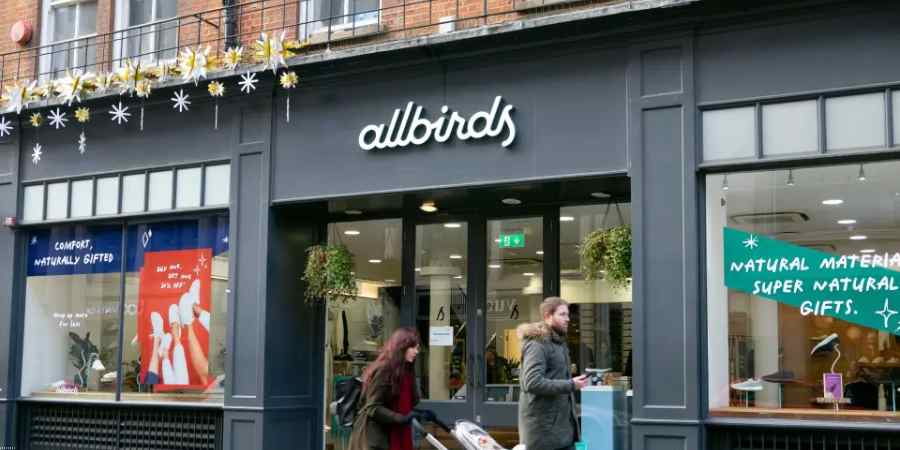
Allbirds were supposed to be the future of footwear. Comfortable, sustainable, hyped by Silicon Valley, and backed by a $4.2 billion IPO in 2021. 3 years later, the company closed every full-price store in the United States, posted a $77.3 million net loss, and sold itself for just $39 million to avoid going bankrupt.
That’s a near-total collapse, and the story behind it says a lot about what happens when a brand mistakes a viral moment for a lasting business.
What Happened to Allbirds?
Allbirds was a phenomenon when it went public in 2021 with a $4 billion valuation. Founded in 2015, the company promised comfortable shoes for everyone and delivered on that promise early on. Celebrities wore them. Tech workers swore by them. The brand had a clear identity and a product that people genuinely liked.
But viral popularity and long-term profitability are two different things, and Allbirds never quite made the jump.
GlobalData Managing Director Neil Saunders put it plainly: the brand had some early success, but it was driven more by Silicon Valley hype than deep popularity with everyday consumers across the country.
The company tried to grow its way out of the problem. It expanded into apparel, which largely flopped. It opened dozens of physical retail stores, which added costs it couldn’t sustain. And through all of it, it never turned a profit.
Why Did Allbirds Close All Its Stores?
Was opening physical stores a mistake?
Allbirds started as a direct-to-consumer, digital-only brand. When it moved into physical retail, it changed its financial model entirely. Online brands carry one big structural advantage: no expensive storefronts, lower overhead, and typically higher margins. The moment you sign retail leases, that changes fast.
The cash crunch eventually forced Allbirds to close all 60 of its retail locations and sell the brand to avoid filing for bankruptcy.
Over fiscal 2024, Allbirds closed 14 U.S. stores, followed by nine more in the first half of 2025. By early 2026, the retailer planned to shut the remaining roughly 20 full-price locations, keeping only two outlet stores in the U.S. and two brand-run stores in London.
Revenue in the third quarter of 2025 came in at $33 million, down 23.3% from $43 million the same period the year before. The losses weren’t narrowing fast enough, and the business had nowhere left to cut except the stores themselves.
What did Allbirds say about the closures?
Allbirds CEO Joe Vernachio framed the decision as a necessary step: “This is an important step for Allbirds, as we drive toward profitable growth under our turnaround strategy.”
The company said closing stores would allow it to “dedicate resources toward its e-commerce platform, wholesale partnerships and international distributorships, all of which offer greater reach, flexibility and operating leverage.”
In simple terms: they’re going back to what they were originally, an online brand.
How Bad Were the Financials?
The numbers tell the real story.
Allbirds posted a net loss of $77.3 million in 2025 and burned through $55.1 million in operating cash flow. The company had just $26.7 million in cash at year-end, with $17.4 million already drawn on its credit facility.
Full-year 2025 net sales dropped nearly 20% year over year, landing at $152.5 million. Gross margin also slipped, falling from 42.7% to 41%.
To stay solvent, Allbirds put a $100 million shelf registration in place and launched a $50 million at-the-market stock program, but had only raised $1.7 million through it by year-end 2025. That tells you how much confidence investors had.
In 2024, the company had to do a 1-for-20 reverse stock split just to maintain Nasdaq’s minimum bid price and avoid being delisted.
Who Bought Allbirds, and for How Much?
American Exchange Group (AXNY), a privately held company whose portfolio includes Aerosoles, Ed Hardy, and Jonathan Adler, agreed to acquire Allbirds for approximately $39 million.
The SEC filing noted that Allbirds “does not expect to continue its operations” once the sale is complete. The sale is expected to close in Q2 2026.
One analyst put it sharply: “Selling for $39 million after a $4.1 billion peak isn’t just a bad exit. It’s a fire sale at 1% of their value. Their fatal mistake was that they mistook a single viral product for a permanent lifestyle brand.”
That’s a brutal but accurate read.
What Does the Allbirds Collapse Tell Us About DTC Brands?
Are other direct-to-consumer brands facing the same problems?
Allbirds is not alone. Other DTC brands that operate physical stores and have faced bankruptcy risk include Sleep Number, Rent the Runway, and Peloton, according to a 2024 report from Health Merchant Services citing CreditRiskMonitor.
Parachute Home, another digital-first brand, followed a similar path, it closed 19 of its 26 stores and went back to e-commerce and wholesale partnerships after physical retail proved unprofitable.
The pattern keeps repeating. A brand finds an audience online, raises money, opens stores to “scale the brand,” and then discovers that retail is expensive, unforgiving, and very hard to exit cleanly.
Can Allbirds survive under new ownership?
At the close of 2025, Allbirds employed 362 people. Over 200 of them worked in stores, and the company now has fewer than 50 retail employees. Most of the workforce is gone. What’s left is the brand name, the IP, and whatever goodwill remains.
AXNY has a track record of acquiring and running footwear brands, so there’s a path forward. Aerosoles, which they also own, had its own near-death experience and came back in a smaller form. Allbirds could do the same, but it will look nothing like the $4 billion company people remember.
Conclusion
Allbirds closed all its full-price U.S. stores, sold itself for $39 million, and now exists as a going-concern warning attached to a sale agreement. The brand that once symbolised everything cool about sustainable, Silicon Valley-approved fashion is being absorbed quietly into a holding company.
Allbirds had a real product that real people liked. But it also tried to expand into apparel, finding far less success, and never built the kind of broad consumer base needed to sustain a public company.
The lesson isn’t that DTC brands can’t work. It’s that hype isn’t a business model, and physical retail doesn’t automatically fix what’s broken online. Allbirds had both problems at once, and ran out of time to fix either.
Key facts at a glance:
- Peak valuation: $4.2 billion (2021 IPO)
- Sale price: $39 million (2026)
- 2025 net loss: $77.3 million
- Stores closed: All 60+ full-price U.S. locations
- Buyer: American Exchange Group (AXNY)
- Employees remaining: Fewer than 50 in retail