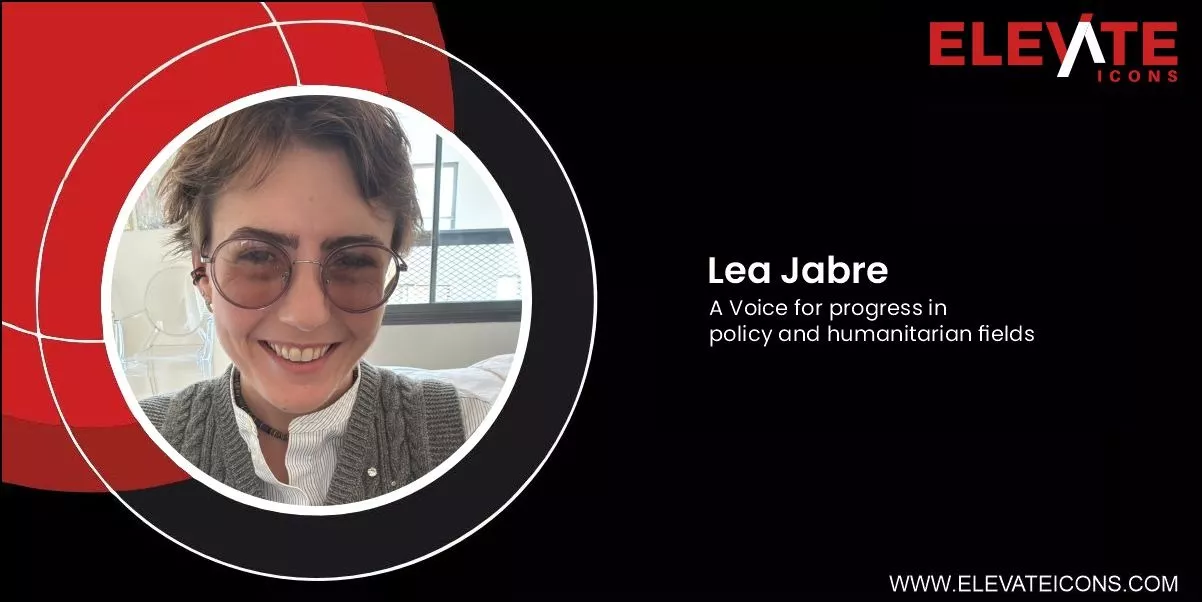
Work in public service, global policy, and human care often begins with a simple truth. People want dignity, clarity, and support. This idea sits at the heart of the NGO and journalism fields, and it creates a space where detail, empathy, and steady effort matter every single day. This space feels familiar to Lea Jabre, because her path grew inside it long before she fully understood its pull.
Lea carries a Franco Lebanese identity, and her life moved through France, Spain, the United Kingdom, Lebanon, and The Gambia. Each place offered its own pace, sense, and lesson. These experiences shaped her way of listening and her ability to move with ease across cultures. They also prepared her for the work she later embraced with intention.
Her time at University College London strengthened that direction. She completed an MSc in International Public Policy, where theory met real human stories. The program helped her understand how decisions shape public life, and how leadership gains meaning when it serves people. These ideas became anchors in everything she built afterward.
Lea harbored this drive into journalism and several NGO roles. She spent years building skill, trust, and insight. Today she works remotely from London as Fundraising and Communication Manager at Reddo Care, where she guides stories, support, and community building with calm focus. Over time she felt a call toward home, which led her to co-create Boukra Nour, an NGO in Lebanon built to offer hope and steady guidance.
Life brought another turn when Stiff Person Syndrome entered her journey. Instead of silence, she chose voice. She became an active advocate for SPS and rare diseases, lifting awareness through courage, clarity, and heart. Her path persists with purpose, formed by every place she lived, every story she carried, and every person she hopes to uplift.
A Life Built Across Borders
Travel influences how a person interacts with the world. Moving between cultures often expands someone’s sense of belonging. That is exactly what happened with Lea.
Lea feels fortunate that life in France, Spain, the UK, Lebanon, and The Gambia helped her learn four languages: English, French, Spanish, and Arabic. Those experiences opened her to many cultures, and she now feels at ease in places far from her origins. She believes these influences shaped her identity and helped her adapt wherever she goes. She describes herself as a citizen of the world and considers that a blessing.
The Spark for International Public Policy
Career paths often emerge from someone’s environment and early interests. Politics shaped Lea’s curiosity from a young age.
She developed a strong interest in politics early on. With Lebanese parents, Middle Eastern politics drew her attention, while growing up in the EU during a pivotal moment strengthened her interest in global affairs. After completing her undergraduate degree at University College London, pursuing an MSc in International Public Policy felt like a natural continuation. Her first roles as a political consultant and journalist tied closely to her studies, but her path shifted toward the nonprofit sector, where she became a Director.
That is where she discovered the true impact of advocacy. She championed neurodiversity and inclusion, and after receiving her rare disease diagnosis, she stepped into rare disease advocacy almost unintentionally. Over time it became a central part of her life. She is deeply proud of Bent Not Broken Autoimmune on Instagram and the YouTube series Living with Stiff Person Syndrome Heart to Heart with Dr Ilea Khan, her SPS best friend.
The Moment Her Advocacy Deepened
Advocacy often accelerates after a single public event. For Lea, that moment arrived quickly.
When Celine Dion publicly shared her SPS diagnosis, Lea had already created her page and posted a video titled If you’re not dancing something is wrong. That announcement amplified everything. Interviews followed, and the momentum grew fast.
Working at Reddo Care
Behind the scenes, social care organizations rely on coordination and communication. Lea’s role sits at the center of that process.
She joined Reddo Care in May 2024, shortly after recovering from severe septic shock. A close friend offered her the opportunity, and her responsibilities grew as her health improved. Reddo Care does not work directly with patients. Instead, it bridges local authorities with Family Support Workers who assist children and young people. She is shaping internal communications and is now exploring strong fundraising approaches that she plans to initiate in early 2026.
Founding Boukra Nour
Founding an NGO often comes from shared purpose and personal connection. Lea’s involvement grew naturally from both.
The same friend who brought her into Reddo also encouraged her to help create Boukra Nour. She met Georges at nineteen. Both share Lebanese heritage. His drive to support Lebanon and her decade of nonprofit experience made the decision almost immediate. They teamed up with another friend, a respected lawyer, and are launching the NGO with a press conference on December 28.
Boukra Nour Objectives
• Promote human dignity across all fields
• Support youth in healing from trauma
• Reduce stress, anxiety, and emotional burdens through therapeutic tools
• Build strategic partnerships with NGOs, ministries, and municipalities
Mission and Vision
• Provide training for educators, social workers, and child care professionals
• Emphasize trauma informed care and early identification of neglect
• Offer technology that improves case management
• Create remote employment opportunities that support stability for young people in Lebanon and the region
Balancing Professional Work and Advocacy
Managing leadership responsibilities while living with chronic illness brings constant pressure. Lea feels that reality daily. She admits it is challenging, especially while managing multiple autoimmune conditions. Even so, the work pushes her forward. She calls it a personal drive.
Global Challenges for Rare Disease Patients
Across the world, patients with rare conditions share similar barriers. Lea has observed these patterns through her advocacy. She notes a clear improvement in awareness and advocacy worldwide. What lags behind is research and funding. She believes NGOs and policymakers hold the influence needed to accelerate progress in these areas.
Raising Awareness About SPS
Most people still know little about SPS. Lea uses honesty and instinct to change that.
She never relies on a fixed method. Her videos, photos, and messages happen naturally. She believes in showing the real moments, from difficult to beautiful. Nothing is rehearsed or staged. She feels this authenticity is what makes her presence resonate. One important misconception she wants to correct is the updated term. SPS is now SPSD, Stiff Person Syndrome Disorders, to reflect its full spectrum.
A Memorable Advocacy Moment
Every advocate remembers their first big step into public storytelling. Lea’s moment was both humorous and meaningful.
During her first recorded interview, she held her phone incorrectly on a Zoom call, and the final video captured her from a low angle. The message remained strong even though the angle was not ideal. She looks back on it fondly because it shows she led with heart and refined her content skills over time. The message always mattered more.
The Power of Community
For rare disease patients, community knowledge often fills the gaps that science leaves open. Lea learned that firsthand. She considers community support essential. Connecting with other SPS patients gave her answers and reassurance that she could not always get from medical teams alone.
Differences Across Regions
Experiencing healthcare systems across continents gave Lea a front row view of global inequality.
She observes a wide disconnect. Africa is making progress in awareness but struggles with accessibility because of economic constraints. The Middle East offers strong healthcare but is just opening up to broader awareness efforts. The EU balances both fairly well, though quality still depends heavily on location.
Bridging the Global Gap
Connecting developed and developing nations around rare disease care requires cooperation and reach. Lea holds a clear vision for that work.
She recognizes that the goal is ambitious but necessary. She believes many people must come together to carry that vision. Media exposure can help significantly. Her interviews across global publications have already amplified awareness in powerful ways.
Goals for the Future
Every mission grows stronger when the goals are clear. Lea has both short term and long term aims for her work. She hopes the Boukra Nour launch event goes smoothly so meaningful work can begin in 2026. She also wants her advocacy to keep expanding worldwide and hopes to continue sharing information that supports others.
What Keeps Her Going
Advocacy can be draining, but creative expression and emotional support often help advocates stay steady. Her writing anchors her. She aims to complete a manuscript with the hope of publishing it. She also draws strength from her close circle, including her family, spouse, and friends.
A Message to the Rare Disease Community
People living with rare diseases often look for reassurance that life can still feel meaningful. Lea offers that from her own lived experience.
She believes life continues and so does the chance to make beautiful memories. Despite the pain and the constant battles, many positive things have emerged in her life. The greatest shift has been learning to live in the present and enjoy each day for what it brings. She hopes others can experience that same grounding. Fighting to survive helped her discover parts of herself she may never have known otherwise. She hopes others find similar strength. She ends with her favorite affirmation in French: J’aime la vie.