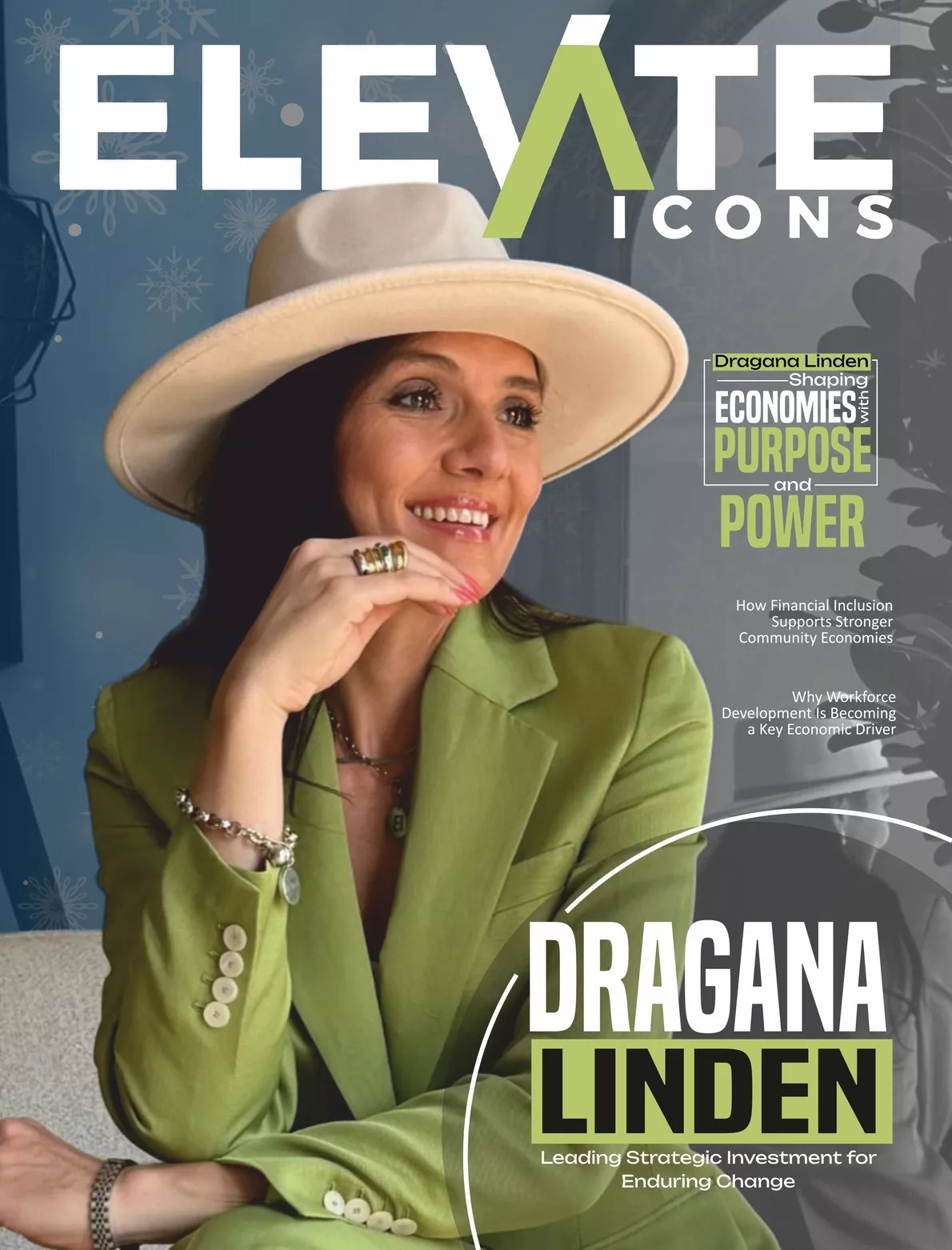
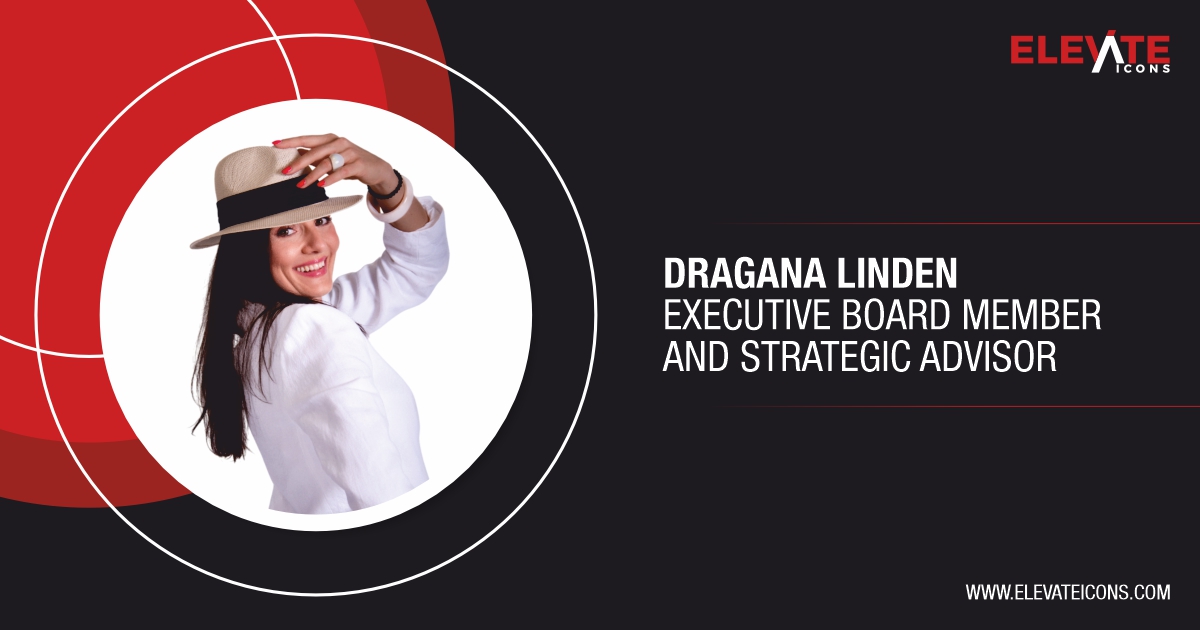
As a global executive leader, Dragana Linden guides her work with a rare balance of vision, precision, and purpose. She serves as CEO and Co-Founder of two international entities, while also holding executive-level advisory and board roles across major investment platforms. Her influence spans sectors and regions, shaped by a consistent focus on building environments that strengthen communities and endure over time. This approach is defined by strategic foresight and a steady belief that meaningful progress emerges where innovation and humanity intersect.
For Ms. Linden, leadership is a synthesis of architecture, engineering, and investment. It is not a title or a function, but a lifelong pursuit of transforming imagination into tangible impact. Leadership, in this view, is a responsibility to align creativity with discipline, ambition with accountability, and vision with execution in ways that serve both people and progress.
From Vision to Purpose: Leadership Grounded in Strategy
Her journey reflects a natural progression from creative curiosity to global influence. With a formal foundation in architecture and engineering, she developed both visionary thinking and structural discipline early in her career. These two forces continue to shape her leadership today, enabling her to navigate complexity with clarity and confidence.
She directs initiatives that support national development goals while remaining deeply rooted in human experience. Each project is shaped to generate economic value while strengthening cultural continuity and social relevance. The philosophy is clear: investment is not only about capital allocation, but about shaping environments that nurture communities, inspire innovation, and create lasting legacy.
Strategy, in her work, is never detached from purpose. It is the mechanism through which values are translated into outcomes. Every decision is evaluated through both an analytical and a human lens, ensuring that growth remains sustainable, intentional, and meaningful.
Humanity in Design: The Early Foundation
Long before her executive career, Ms. Linden’s fascination with design began in childhood. She sketched buildings not for their façades, but for how people might feel within them—imagining movement, interaction, and emotion as integral parts of structure. This instinct to connect space with human experience later became the foundation of her leadership philosophy.
What began as a creative impulse evolved into a strategic framework. Through education and professional exposure, she came to understand that design and purpose are inseparable. Over time, this perspective enabled the leadership of multidisciplinary teams that merge creativity with measurable outcomes. Each project became a statement that the strongest decisions are those that elevate human experience while delivering real-world impact.
This early sensitivity to people’s needs continues to inform her approach today. Whether guiding large-scale infrastructure or strategic investment initiatives, the focus remains on how environments shape behavior, opportunity, and collective identity.
A Vision Shaped by Purpose
At the core of this work lies a clear intention: to create sustainable, people-centered change through purposeful investment. The philosophy moves beyond traditional capital deployment, focusing instead on building ecosystems that empower innovation, preserve cultural identity, and uphold long-term sustainability.
Every choice reflects a dual commitment to economic growth and societal value. Each initiative is viewed as part of a broader story of progress—one that connects business outcomes with human aspirations. Through this lens, investment becomes a force for inclusivity and national pride, ensuring that development enhances prosperity and purpose together.
Purpose, here, is not an abstract ideal. It is an operational principle. When purpose is clear, alignment follows, and outcomes gain depth and endurance.
Vision Anchored in Precision
Ms. Linden’s dual background in architecture and engineering gives her leadership a distinctive edge. It allows opportunities to be evaluated through both conceptual imagination and practical viability. Architecture fostered bold, expansive thinking. Engineering instilled discipline, accountability, and respect for constraints.
This integration creates a framework where creativity is strengthened by structure and innovation is grounded in feasibility. Each project is measured not only for profitability, but for endurance—work designed to inspire, adapt, and sustain over time with lasting relevance. The result is an approach that unites artistic vision with technical integrity, producing outcomes that are both aspirational and reliable.
Precision, in this context, is not restrictive. It is what enables vision to materialize. Without rigor, ambition remains theoretical; without imagination, precision loses meaning.
Landmark Achievement: Merging Vision and Precision
Through executive leadership involvement in the Lusail Stadium project for the FIFA World Cup 2022, as part of a broader international consortium, one of the most defining milestones of her career took shape. The project embodied the principles that characterize her leadership: cross-disciplinary collaboration, national symbolism, and uncompromising quality.
Delivering such a complex initiative within ambitious timelines required balancing imagination with precision. Cultural authenticity had to coexist with modern engineering excellence. Every decision carried significance—not only for Qatar’s presence on the global stage, but for the values represented through the structure itself.
Lusail Stadium became more than an architectural achievement.
It became a lesson in leading under pressure—reinforcing the belief that vision requires trust, clarity, and collective purpose to succeed when expectations are high and visibility is global.
Balancing Vision and Execution
Innovation thrives in environments built on trust and empowerment. Bold ideas are encouraged, alongside clear delivery metrics, timelines, and accountability frameworks to ensure execution. This balance between creative freedom and structural rigor allows ambition to translate into results.
Teams are supported to think expansively while delivering with accuracy. By bringing together diverse disciplines and cultural perspectives, ideas evolve into outcomes that serve both purpose and progress. Leadership becomes an act of orchestration—aligning talent, vision, and execution toward shared impact.
Execution, here, is not the opposite of creativity. It is its fulfillment.
Evaluating Risk as a Path to Impact
Risk is not something to avoid, but a lens through which possibility is revealed. Uncertainty is approached with careful analysis and conviction, with challenges seen as opportunities to redefine limitations.
In initiatives tied to national development, stakes are high—and so is the potential for transformation. Alignment remains the guiding principle. When an initiative respects cultural values, strengthens sustainability, and creates long-term value, the potential outweighs the risk.
Constraint, in this view, often becomes a catalyst for creativity. Pressure reveals solutions that comfort never will.
Balancing Returns with Enduring Value
Financial success is one measure of achievement, but never the only one. True performance lies in creating assets that remain meaningful and resilient for generations.
Each decision is filtered through a legacy lens. Sustainability, adaptability, and cultural relevance guide the work, ensuring that immediate returns strengthen long-term value rather than replace it. The most powerful investments are those built to last.
Sustainability as a Guiding Principle
Sustainability is not an add-on; it is a governing lens through which decisions are evaluated. It shapes planning, investment, and execution, guided by the belief that progress today should never limit opportunity tomorrow.
Projects prioritize efficient systems, resilient infrastructure, and community empowerment. Sustainability extends beyond environmental responsibility—it represents a commitment to adaptability, longevity, and future generations.
True sustainability, in this framework, lives in resilience.
Cultivating Cross-Cultural Collaboration
Working across regions where global expertise meets deep cultural heritage requires the ability to translate between worlds. Successful collaboration begins with respect—listening before advising.
Operating at the intersection of tradition and innovation, diverse perspectives are valued equally. By recognizing cultural nuance and empowering multiple viewpoints, potential friction is transformed into creative momentum.
Humility remains essential. When people feel acknowledged, they contribute with greater purpose.
Essential Qualities for Tomorrow’s Leaders
Adaptability and emotional intelligence will shape the next generation of leaders. Change moves quickly, and success increasingly depends on the ability to pair analytical rigor with creative thinking.
Resilience sits at the center of this approach. Leadership is understood as a practice that evolves over time—guided by learning, openness, and clarity of purpose.
Sustaining Curiosity and Mentorship
Inspiration is cultivated intentionally through exposure to new ideas, cultures, and conversations. Reading, travel, and mentoring young professionals remain central, each offering fresh perspective.
Mentorship is viewed as a two-way exchange. By supporting others, thinking is renewed. Empowering the next generation becomes both a responsibility and a source of creative momentum.
Balancing Analysis and Creativity
Emerging professionals are encouraged to cultivate both analytical discipline and creative intuition. Numbers provide credibility; imagination provides meaning. Innovation happens in the space where the two meet.
Failure is embraced as a necessary teacher. Setbacks become moments of refinement rather than signs of weakness.
Vision for Impact and Legacy
The long-term vision blends strategic ambition with social purpose—aimed at influencing projects that redefine how nations build and setting new standards for innovation, sustainability, and inclusion.
A deep commitment remains to mentoring emerging leaders, particularly women. Legacy, ultimately, is not defined by scale alone, but by meaning and endurance.
Guiding Philosophies
“Build for generations, not quarters. Leadership is measured not by today’s wins, but by the legacy that remains.”
“Excellence must be paired with humility. Leadership is not the loudest voice in the room, but the ability to listen, support others, and build something greater together.”
“Resilience has more value than talent. Talent may open doors, but resilience is what carries you forward when the path becomes difficult.”