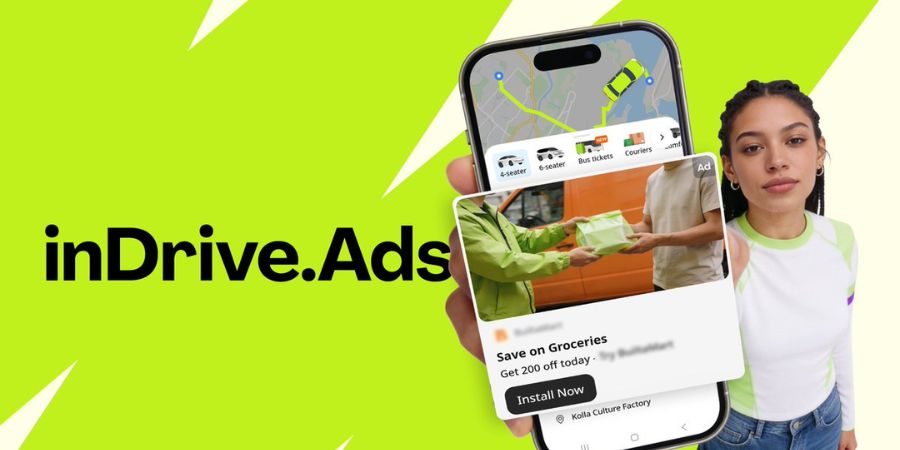
inDrive has quietly moved its business model beyond fare commissions with inDrive Ads, a global in-app advertising platform designed to generate higher-margin revenue while keeping fares affordable and driver commissions low.
The ad platform has been rolled out across inDrive’s top markets as the company accelerates its super-app strategy, and market observers say the move will reshape how mobility platforms in price-sensitive regions balance growth and profitability.
What are inDrive Ads?
inDrive Ads places digital ad inventory inside the inDrive experience: high-attention moments such as the pre-trip waiting screen, the en-route journey, and other in-app touchpoints where users are engaged.
The company positions the product as a way to diversify revenue away from pure commission reliance, a familiar challenge for ride-hail businesses operating in emerging markets, where price competition and thin margins are the norm. Early trials reportedly delivered hundreds of millions of impressions and attracted interest from global brands and financial institutions.
This matters because digital advertising is a higher-margin line than ride commissions. For platforms that promise low fees to drivers and cheap rides to users, ad revenue offers a way to fund those promises sustainably. inDrive’s messaging makes this explicit: the ad product is designed to help keep fares low and support driver earnings, rather than replace core marketplace economics.
Why South Africa is a strategic play
South Africa is a priority market in inDrive’s African expansion roadmap. The company has been growing its service footprint there across verticals, from ride-hailing to freight and delivery, and local launches of new monetization features are consistent with that focus. Deploying in-app ads in South Africa lets inDrive test creative formats, pricing, and local advertiser demand in a market that combines relatively high smartphone penetration with a large, urban commuter base.
Localisation will be key: advertisers and formats that work in North America or Latin America won’t necessarily translate to South Africa. Expect inDrive to lean on short video, static display in waiting screens, and hyper-local partnerships (grocery, fintech, quick-service retail) to prove the economics.
That approach aligns with the company’s stated plan to prioritise digital formats through 2026 while deferring more operationally complex physical ad formats (for example, in-car or on-vehicle wraps) to a later phase.
What advertisers and drivers should expect
Advertisers: inDrive offers access to “captive” audiences, users who are highly engaged during short windows (booking and ride time). For brands, the appeal is reach in markets that often lack mature, scalable in-app ad inventory.
Early campaign interest reportedly includes global consumer brands and financial services companies. Campaign performance will depend on targeting, creative that fits short attention spans, and measurement tied to local conversion behaviours.
Drivers and riders: inDrive’s public framing stresses that ad income will help maintain low platform take rates. However, drivers and riders should watch for product design choices that affect experience, notably the frequency and intrusiveness of ads during trips.
The company has previously tested promos and driver incentives in several African markets; transparency about revenue sharing or reinvestment of ad proceeds will be crucial to maintaining trust.
Risks and opportunities
Risks: poor ad experience (too many or irrelevant ads) can erode user retention; advertisers may be hesitant to commit if local measurement is weak; and regulatory or public backlash around monetising in-trip moments could arise if users feel exploited. For drivers, if ad revenue simply props up lower commissions without direct benefits to partners, dissatisfaction could grow.
Opportunities: if executed well, inDrive can create a virtuous cycle, better monetisation funds lower fares and improved driver earnings, which in turn boosts scale and advertiser ROI. The company’s super-app ambitions (grocery, delivery, fintech) also open cross-sell opportunities, letting advertisers reach customers across multiple purchase journeys inside one platform.
What to watch next
- Ad format and frequency – are the ads going to be skippable? Video or static? Frequency caps matter.
- Local advertiser takeup – initial agreements with banks, grocery chains or telcos will be a validaton of the model.
- User experience measures – retention and NPS in markets where ads are running will determine whether monetisation would have a detrimental effect on growth.
- Driver economics – transparency on whether advertising revenue is substantially contributing to driver take-home pay or is being consumed at the platform level.
Conclusion
inDrive Ads is a calculated pivot: it responds to the fundamental economics of running a global ride-hailing and services platform in price-sensitive regions. If inDrive balances advertiser needs with a respectful user experience, and if ad proceeds are visibly reinvested to support affordability and drivers, the platform could provide a replicable path for other mobility apps in emerging markets.
For South Africa specifically, the launch aligns with inDrive’s broader super-app roadmap and will be one of the clearest tests of whether in-app ads can underwrite fair-pricing promises without undermining the product experience.