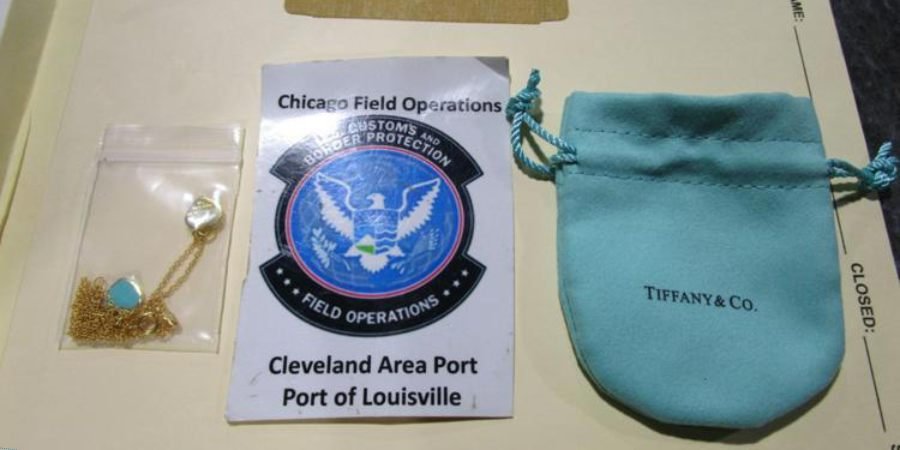
Millions of packages land in the U.S. every single day. Most carry exactly what the label says. But some do not, and that gap is exactly where counterfeit smugglers operate. In 2025, Louisville CBP counterfeit jewelry seizures crossed numbers that are hard to ignore. Officers at the Louisville Port of Entry stopped a shipment from Hong Kong carrying fake luxury jewelry with a retail value of over $14 million. The pieces looked real enough to fool most buyers. They were heading straight to American homes.
5 quick facts:
- 7,000+ pieces of fake designer jewelry seized in one shipment
- Shipment originated from Hong Kong, declared as “metal necklaces”
- Estimated retail value: over $14 million if genuine
- Brands copied: Cartier, Van Cleef & Arpels, Chanel, Gucci, Louis Vuitton
- Louisville CBP stopped $30M+ in fake Hong Kong jewelry in August 2025 alone.
What CBP Found Inside That Shipment
The package arrived through Louisville’s Express Consignment Operations hub, a high-volume facility that processes millions of international packages weekly, largely because of the nearby UPS Worldport air hub.
On the customs form, someone wrote “metal necklace.” Inside were thousands of counterfeit pieces, each one carefully designed to look like it came from one of the world’s most expensive jewelry houses.
Brands found in the seized shipment:
|
Brand |
Signature Product Being Faked |
|
Cartier |
Love bracelets, Trinity rings |
|
Van Cleef & Arpels |
Alhambra necklaces, Perlée pieces |
|
Chanel |
CC logo chains, quilted jewelry |
|
Gucci |
Interlocking G rings, bangles |
|
Louis Vuitton |
Monogram ID bracelets, pendants |
These were detailed fakes, polished, packaged, and convincing enough for most online shoppers to accept without question.
How Does CBP Detects Counterfeit Goods?
This is one of the most searched questions around customs enforcement, and the answer is more layered than most people expect.
CBP intellectual property rights enforcement runs on a combination of human expertise, risk intelligence, and brand cooperation. Here is the actual process officers follow:
Step-by-step detection process:
- Pre-arrival manifest review – CBP uses shipping information to assess packages before they arrive at their destination.
- Risk targeting algorithms – systems use shipment data which includes origin country information and declared product value and past shipment records to identify potential risks.
- Physical inspection – officers examine packages which received flags to match their contents with brand authentication documents.
- Centers of Excellence and Expertise (CEE) – specialized trade teams verify trademark violations on complex cases.
- Brand coordination – luxury houses like Cartier and Chanel work directly with CBP through the e-Recordation program, sharing authentication details so officers can identify fakes faster.
- Official seizure – process begins when authorities confirm the process, which results in goods being taken and the importer receiving an official notification.
In this particular Hong Kong counterfeit shipment seized, the declared value did not match the volume and nature of the goods. That mismatch alone triggered a deeper look, and officers found exactly what the numbers suggested.
Why Louisville? Most People Never Think About This
Ask someone where major U.S. customs seizures happen and they will say New York, Los Angeles, maybe Miami. Rarely Louisville.
But Louisville holds a specific position in global logistics that makes it one of the most active interception points in the country. UPS Worldport, located right next to Louisville Muhammad Ali International Airport, is one of the largest air cargo sorting facilities on the planet. On a busy night, it processes over 2 million packages flowing in from dozens of countries.
That kind of volume is exactly what counterfeit smugglers look for. Hide one fake shipment inside two million packages and the odds feel favorable.
CBP at the CBP Louisville port of entry has been consistently disrupting that logic:
|
Date |
Seizure |
Origin |
MSRP Value |
|
August 2025 |
Fake designer earrings |
Hong Kong |
$30M+ |
|
Early 2025 |
Mixed luxury jewelry |
Hong Kong |
$14M+ |
|
2024 (multiple) |
Counterfeit accessories |
China/Hong Kong |
Varies |
The CBP Louisville port of entry has quietly become one of the most important chokepoints for counterfeit designer goods seized at customs, specifically goods routed through express delivery networks to avoid traditional cargo screening.
The Real Risk Nobody Talks About – Consumer Safety
Brand damage gets most of the headlines. The safety angle gets far less attention, and it probably should get more.
Counterfeit jewelry is made without any quality control. No material testing and no regulatory oversight. Fake pieces frequently contain elevated levels of lead, cadmium, and nickel, metals linked to skin reactions, hormonal disruption, and in cases of prolonged exposure, more serious health consequences.
A study conducted in 2023 by the U.S. Consumer Product Safety Commission discovered that counterfeit jewelry products which they tested contained lead levels which exceeded federal safety limits. The lead levels in these products exceeded the legal threshold for children’s products by more than 300 times.
CBP’s “Fake Goods, Real Dangers” campaign exists specifically because this is not just an economic issue. Wearing counterfeit jewelry carries physical risk, especially for children.
Economic damage runs deep too:
- The global counterfeit market was valued at approximately $3 trillion in 2024.
- U.S. brands lose an estimated $200–250 billion annually to counterfeiting.
- Counterfeit goods cost the U.S. economy up to 750,000 jobs per year.
- In FY2025, CBP intercepted counterfeit goods with a total estimated MSRP exceeding $7.3 billion.
What Happens to Counterfeit Goods Seized at Customs?
Most people assume seized goods get sold somewhere or donated. They do not.
Here is the actual process after a U.S. Customs and Border Protection seizure:
- Detention – goods are held while trade experts formally verify trademark violations.
- Seizure notice – the importer receives official legal notification.
- Forfeiture – if the importer does not contest or loses, goods are forfeited to the U.S. government.
- Destruction – the vast majority of counterfeit goods are physically destroyed.
- Training retention – a small number of samples are kept for officer training purposes.
- Penalties – civil fines up to the full domestic value of the goods; criminal prosecution for large-scale or repeat offenders.
Importers caught sending Cartier Van Cleef fake jewelry through CBP do not just lose the shipment. They face fines, potential criminal charges, and a permanent flag on their import history.
Cartier, Van Cleef, and the Brands Most Targeted by Fakers
There is a reason these specific brands keep appearing in Louisville CBP counterfeit jewelry seizures. They represent some of the highest price-per-piece luxury jewelry in the world, which means even a convincing fake sells for serious money online.
Most counterfeited luxury jewelry brands globally:
|
Brand |
Why Fakers Target Them |
|
Cartier |
Love bracelet retails $5,000–$20,000+ |
|
Van Cleef & Arpels |
Alhambra pieces start at $2,000+ |
|
Chanel |
Strong logo recognition, wide demand |
|
Rolex |
Watches and accessories, global appeal |
|
Louis Vuitton |
Monogram instantly recognizable |
The Cartier Van Cleef fake jewelry CBP seizures are particularly notable because buyers of these brands are paying premium prices for authenticity, craftsmanship, and materials. A fake sold as genuine is outright fraud, and the people buying on secondhand or unofficial platforms are often the ones absorbing that loss.
How to Protect Yourself as a Consumer
CBP advises buyers to purchase luxury goods only from authorized retailers. Beyond that, there are practical signals most people miss.
Red flags when buying jewelry online:
- Price is 60–90% below the brand’s official retail price
- Ships from Hong Kong, China, or unknown overseas locations with no local returns
- Seller has no verifiable business address or brand authorization
- Product photos look professional but review language feels generic or translated
- No certificate of authenticity or official brand packaging described
How to verify authentic goods:
- Check the brand’s official website for authorized dealer lists
- Purchase directly from brand boutiques or certified retailers
- For secondhand pieces, use brand authentication services (Cartier, Chanel, and others offer these)
- Request full provenance documentation for high-value pieces
One practical rule: if a Cartier Love bracelet is listed for $300 and ships from overseas, it is a fake. Full stop.
CBP’s Broader IPR Enforcement Mission
CBP intercepts counterfeit goods 2025 statistics reflect a system under real pressure, and responding to it.
CBP enforces nearly 500 U.S. trade laws, covering everything from safety standards to intellectual property protections. The agency processes over 36 million cargo containers annually and screens hundreds of millions of individual packages through express consignment hubs.
Top counterfeit categories seized in FY2025:
|
Category |
Share of Total Seizures |
|
Handbags and wallets |
22% |
|
Watches and jewelry |
18% |
|
Apparel and accessories |
15% |
|
Electronics |
12% |
|
Footwear |
11% |
The CBP counterfeit jewelry Hong Kong 2025 pattern fits a broader trend: counterfeiters moving from sea freight to air express specifically because the volume of packages makes screening harder. CBP has responded by expanding CEE teams and deepening coordination with rights holders.
What Does this Seizure Really Means?
A $14 million Louisville CBP counterfeit jewelry seizure is significant on its own. Put alongside the $30 million earring seizure from August 2025, and a clear pattern appears. Louisville is consistently stopping multi-million dollar fake luxury shipments from Hong Kong, and the scale is growing.
CBP intellectual property rights enforcement is not just about protecting brands. It is about making sure what someone pays premium prices for is actually what they receive. And about keeping genuinely harmful materials out of the market.
If you suspect counterfeit goods are being imported or sold, report it directly through CBP’s official e-Allegations portal.
Frequently Asked Questions
How does CBP detect counterfeit goods? CBP uses pre-arrival data analysis, physical inspection, trademark databases, and coordination with brand holders through its e-Recordation program. Specialized trade teams in Centers of Excellence handle complex cases.
What happens to counterfeit goods seized at customs? Seized goods are formally forfeited and then destroyed. A small number are kept for training. Importers face civil fines and potential criminal prosecution.
Why does Louisville CBP seize so much counterfeit jewelry? Louisville houses the UPS Worldport hub, one of the world’s largest air cargo facilities. High express shipment volume makes it a target for smugglers and a key interception point for CBP.
Is buying counterfeit jewelry dangerous? Yes. Fake jewelry often contains lead, cadmium, and nickel at levels far above legal safety limits. There are real health risks, particularly for children.
How can I report suspected counterfeit imports? Use CBP’s e-Allegations portal at www.cbp.gov or contact the National IPR Coordination Center.