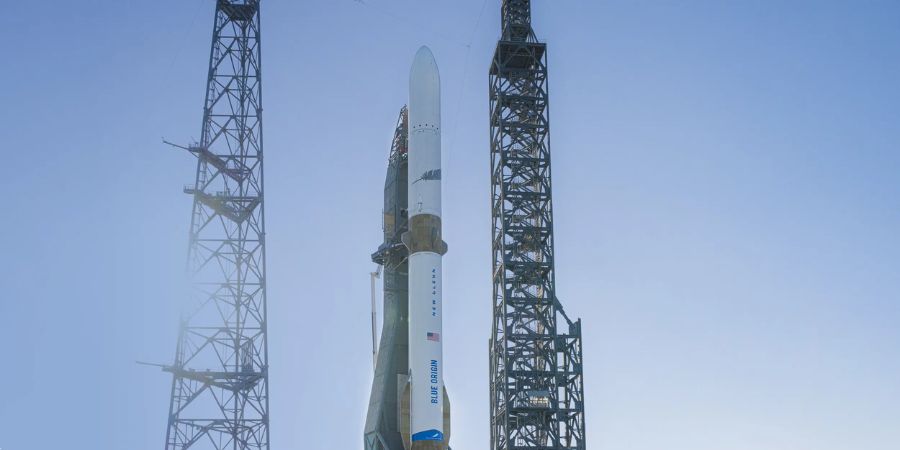
Blue Origin’s New Glenn rocket exploded during a routine engine test at Cape Canaveral on the night of May 28, 2026, destroying the vehicle, wiping out critical launch pad infrastructure, and setting back one of the most important commercial space programs currently operating in the United States.
No one was hurt. But the damage to the rocket, the pad, and Blue Origin’s near-term mission schedule is severe.
What is a Static Fire Test and Why Do Rocket Companies Do It?
A static fire test, also kinda called a hotfire test, is a common pre-launch ritual where a rocket’s engines are briefly ignited, while the vehicle stays bolted tight to the launch pad. The rocket does not take off, so it stays right there. The purpose is to verify that the engines, the fuel systems and the ground infrastructure all behave as they should, before the team gives the go ahead for a real launch.
Every major rocket program runs these tests before committing to a mission. They are considered one of the safer stages of testing because the rocket is grounded and personnel are at a safe distance during the firing sequence. The New Glenn had successfully completed a hot-fire in December 2024 before its first launch.
On May 28, 2026, the test was preparation for the NG-4 mission, the fourth launch of New Glenn, scheduled for as early as June 4.
What Happened on May 28, 2026?
At approximately 9:00 p.m. Eastern Time, Blue Origin began the static fire sequence at Launch Complex 36 (LC-36) at Cape Canaveral Space Force Station in Florida.
The rocket was fully loaded with methane fuel and liquid oxygen, standard for this kind of test. As the seven BE-4 first-stage engines appeared to ignite, something went wrong almost immediately at the rocket’s base. The 188-foot first stage collapsed in flame. The 87-foot upper stage tilted and fell as the rocket’s full propellant load ignited, erupting into what multiple outlets described as one of the largest on-pad explosions in American launch history.
Residents in Cape Canaveral and Cocoa Beach reported hearing and feeling the blast. Footage from local cameras showed the fireball billowing skyward, visible from miles away.
Blue Origin confirmed in a statement on social media that the rocket had “experienced an anomaly during today’s hotfire test.” Jeff Bezos posted shortly after: “All personnel are accounted for and safe. It’s too early to know the root cause but we’re already working to find it. Very rough day, but we’ll rebuild whatever needs rebuilding and get back to flying. It’s worth it.”
Brevard County Emergency Management issued a notice about the anomaly, cautioning that there was no threat to the general public. Space Launch Delta 45 confirmed no injuries or fatalities.
The FAA told SpaceflightNow that the static fire explosion would not prompt a new investigation by that agency, noting: “This test was not within the scope of FAA licensed activities. There was no impact to air traffic.”
What Did the Explosion Destroy Beyond the Rocket?
The rocket was a total loss. But the destruction extended well past the vehicle itself, and that is where the longer-term problem lies.
As the smoke cleared, the erector-gantry used to move New Glenn from its hangar to the pad and raise it to vertical was no longer visible. One of two lightning towers had toppled.
The primary umbilical tower remained standing after the blast, but video showed violent shaking that may indicate foundation or structural damage requiring thorough inspection. The tank farm likely sustained major damage as well.
This matters for a specific reason: Launch Complex 36 is Blue Origin’s only orbital launch facility. There is no backup pad, no alternate coast, no bridge timeline.
For comparison, when SpaceX lost pad 40 in a similar on-pad explosion in September 2016, the Falcon 9 was grounded for three and a half months and the pad itself was out of action for more than a year. Blue Origin has not yet provided any timeline for pad reconstruction or return to flight.
What Was the NG-4 Mission Supposed to Do?
The upcoming fourth mission was supposed to be the first of 24 launches that Amazon has contracted Blue Origin for. Amazon is currently building out a competitor to SpaceX’s Starlink satellite internet network, which it calls Leo.
The NG-4 mission was set to carry 48 Amazon Leo broadband satellites into low Earth orbit, with a launch window targeting June 4. Amazon confirmed that no Leo satellites were on board for the hot-fire test.
With the pad destroyed and the rocket gone, all 24 contracted Amazon Leo launches are now frozen with no confirmed timeline. Amazon has more than 100 rockets across four launch providers contracted for its satellite network, but New Glenn was contracted for the largest individual share of that capacity.
How Does This Affect NASA and the Artemis Moon Program?
NASA hasn’t fully determined yet if that incident could mess with future Artemis lunar exploration missions or other programs that will rely on New Glenn’s heavy-lift capabilities. It’s still a bit unclear at the moment, whether impact shows up later, or if anything related has to be adjusted, even for the larger efforts.
NASA Administrator Jared Isaacman responded publicly, stating: “Spaceflight is unforgiving, and developing new heavy-lift launch capability is extraordinarily difficult. We will work with our partners to support a thorough investigation of this anomaly, assess near-term mission impacts, and get back to launching rockets.” He added that NASA would provide information on any impacts to the Artemis and Moon Base programs as it becomes available.
Blue Origin holds a NASA contract to build the Blue Moon MK2 crewed lunar lander under the Artemis program, with a pathfinder flight required in mid-2027. A test flight of the Blue Moon MK1 lander was also targeting fall 2026, headed for the lunar South Pole carrying two pieces of NASA hardware. Both of those missions depend on New Glenn.
There is an additional ripple concern: if the issue is connected back to the main propulsion system and the rocket’s methane-fueled BE-4 engines, that might have a direct impact on United Launch Alliance’s Vulcan rockets, as both vehicles use the BE-4 engine for their first stages.
What is New Glenn’s History So Far?
New Glenn only flew its first mission in January 2025 and has struggled to find its footing. Here is a concise summary of each mission:
Mission | Date | Outcome |
NG-1 | January 16, 2025 | Reached orbit – first commercial rocket to do so on debut flight. Booster not recovered. |
NG-2 | November 2025 | Launched NASA’s ESCAPADE Mars probes. Booster recovered successfully for the first time. |
NG-3 | April 19, 2026 | Booster landed successfully. Upper stage suffered cryogenic leak, satellite lost in wrong orbit. |
NG-4 (planned) | June 4, 2026 | Destroyed in static fire test on May 28, 2026. |
The NG-3 failure was itself a recent setback. Blue Origin’s investigation found that one of its two BE-3U engines had suffered a cryogenic leak that froze a hydraulic line, leading to a thrust anomaly during the upper stage engine burn. The payload, BlueBird 7 satellite for AST SpaceMobile, did not make it to the proper orbit and was destroyed re-entering Earth’s atmosphere. The FAA had only cleared New Glenn to return to flight days before the May 28 explosion.
What Happens Next for Blue Origin?
Right now, there are more questions than answers.
- Root cause: Unknown. Blue Origin says it is investigating but has not identified the cause of the May 28 explosion yet.
- Pad timeline: LC-36 requires full damage assessment before any reconstruction timeline can be set. The erector, at least one lightning tower, and potentially the tank farm need evaluation or replacement.
- Return to flight: No date given. The last comparable pad explosion at Cape Canaveral, SpaceX’s 2016 Falcon 9 incident, took over a year to restore the pad.
- Amazon Leo: All 24 contracted New Glenn launches are paused indefinitely.
- NASA Artemis: Potential schedule impacts are under assessment.
- BE-4 engine: If the engines are implicated in the cause, United Launch Alliance’s Vulcan Centaur program could face scrutiny as well.
Jeff Bezos’ statement, “we’ll rebuild whatever needs rebuilding and get back to flying. It’s worth it,” signals intent. But the practical path back is genuinely difficult. Blue Origin has no second launch pad, no alternative orbital facility, and a mission manifest that was already behind schedule before Thursday night.
Key Facts at a Glance
- When: May 28, 2026, approximately 9:00 p.m. ET
- Where: Launch Complex 36, Cape Canaveral Space Force Station, Florida
- What: Static fire test of New Glenn’s seven BE-4 engines ahead of NG-4 mission
- Casualties: None – all personnel accounted for and safe
- Rocket status: Total loss
- Pad damage: Erector-gantry destroyed, at least one lightning tower destroyed, primary umbilical tower standing but potentially structurally compromised
- Mission impact: NG-4 (48 Amazon Leo satellites) cancelled; all 24 Amazon-contracted launches frozen
- NASA impact: Artemis Moon Base and Blue Moon lander timelines under review
- FAA: Not investigating – test was not within scope of FAA-licensed activities
- Root cause: Unknown as of May 29, 2026