Tesla plans to expand its driverless Cybercab service beyond Austin, enter new markets and begin selling vehicles to fleet operators by the end of 2026. Regulatory scrutiny, autonomous-driving limitations and questions about revenue will test whether the company can scale its robotaxi ambitions.
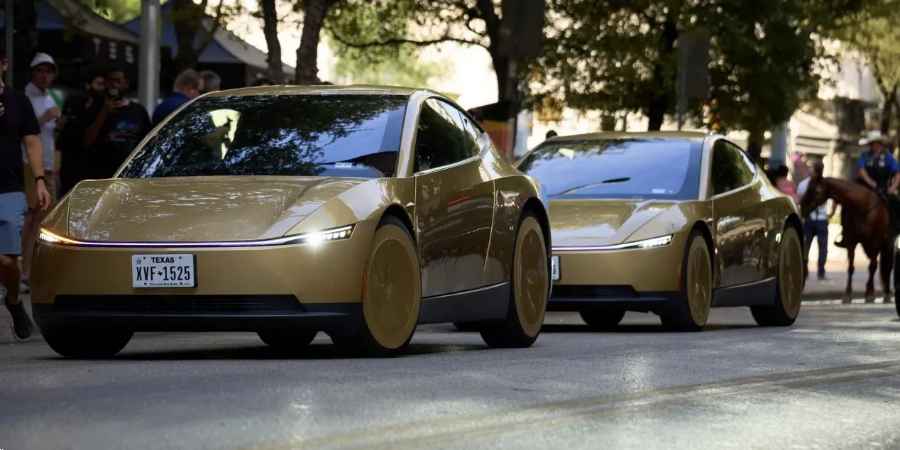
Tesla is preparing to expand its Cybercab robotaxi service to more US cities, signalling a new phase in its ambition to reshape the transportation industry. The company plans to introduce the gold-coloured, two-seat autonomous vehicle in Dallas in November 2026, followed by expansion into additional markets before the year ends. Tesla also intends to begin selling Cybercabs to fleet operators by the end of the year, creating a potential route to accelerate deployment beyond vehicles operated directly by the company.
The announcement, discussed during Tesla’s third-quarter earnings call on October 21, places greater emphasis on execution. Tesla must demonstrate that its autonomous-driving technology can operate safely across different environments, that regulators will permit broader deployment and that the business can generate meaningful revenue.
Tesla Cybercab Expansion Signals a Bigger Robotaxi Strategy
Tesla’s ambitions extend beyond introducing another electric vehicle. The company wants autonomous transportation to become a significant part of its business, with the Cybercab designed specifically for driverless ride-hailing.
Chief Financial Officer Vaibhav Taneja described the broader ambition during the earnings call as an effort to expand from transporting passengers between destinations to serving multiple forms of transportation. Tesla has also presented a larger, multi-passenger vehicle concept called the Robovan, although its latest comments do not establish a concrete launch plan for that vehicle.
The immediate priority remains the Cybercab. Tesla already operates small robotaxi fleets based on its Model Y SUV in Dallas, Houston, Miami, Orlando and Tampa. Expanding the purpose-built Cybercab into additional markets would give the company an opportunity to test whether its dedicated vehicle can support a wider autonomous ride-hailing network.
According to TechCrunch’s report on Tesla’s expansion plans, the company expects to begin the next phase of its rollout in Dallas in November.
Why Tesla Wants to Sell Cybercabs to Fleet Operators
Manufacturing vehicles at scale is only one part of building a robotaxi business. Companies must also deploy vehicles across service areas, manage fleets, maintain vehicles and ensure that enough customers use the service to justify the investment.
Tesla’s plan to sell Cybercabs to fleet operators could help it expand beyond the pace of a company-operated fleet. External operators could potentially provide vehicles, infrastructure and local fleet-management capabilities, allowing Tesla to broaden its network without managing every operational detail itself.
The strategy also creates a possible business model beyond vehicle sales to individual consumers. Tesla could supply purpose-built autonomous vehicles to businesses that want to participate in the robotaxi market.
However, the commercial structure remains unclear. The company has not established how widely third-party fleet operators will be able to participate or what the economics of such arrangements will look like.
Tesla’s manufacturing leadership has expressed confidence that the Cybercab will be relatively straightforward to produce at scale. If that proves true, manufacturing capacity may become less of a constraint. Yet producing vehicles efficiently does not automatically translate into profitable operations. Fleet utilisation, maintenance expenses, regulatory requirements and customer demand will all influence the economics.
Tesla Faces Regulatory Challenges Over Its Driverless Design
One of the Cybercab’s defining features is also one of its biggest regulatory challenges: the vehicle has no steering wheel, brake pedal or side mirrors.
In September 2026, the National Highway Traffic Safety Administration (NHTSA) opened an investigation into Tesla’s certification of the Cybercab. The inquiry examines how the company determined that the vehicle complies with federal motor vehicle safety standards designed around conventional vehicles.
Tesla has maintained that the vehicle complies with applicable requirements. The regulator, however, is examining the basis for that certification. Although changes to federal standards for autonomous vehicles have been proposed, those changes must be completed before they can remove the relevant regulatory obstacles.
The investigation does not, by itself, establish that Tesla has violated safety rules. It does create uncertainty around how quickly the company can expand commercial deployment.
This issue matters because Tesla’s expansion plans depend on more than manufacturing speed. A vehicle can be ready for production while its commercial deployment remains subject to regulatory restrictions.
Autonomous-Driving Technology Remains Another Bottleneck
Regulatory approval is not the only challenge facing Tesla. Ashok Elluswamy, the company’s vice president overseeing autonomy, said during the earnings call that wider deployment also depends on the capabilities of its AI software.
Tesla has gradually extended the operating hours of its robotaxi service, moving beyond its initial daytime schedule towards later-night availability. The company also intends to improve its ability to handle more demanding driving scenarios before expanding further.
These developments highlight a fundamental requirement for autonomous transportation: the technology must operate reliably across different road conditions, traffic patterns, visibility levels and operating environments.
Tesla’s approach differs from simply manufacturing a vehicle and making it available to customers. Its robotaxi network depends on software that must perform safely enough to support driverless operations across a growing service area.
The company has expressed confidence in its progress, but broader deployment will provide a more meaningful test of that progress than announcements alone.
Tesla’s Robotaxi Revenue Remains Difficult to Assess
Another unresolved question is whether Tesla’s robotaxi service is generating enough paid demand to support its long-term ambitions.
During the earnings call, Taneja said utilisation was improving but did not provide specific figures for paid robotaxi miles. Tesla also changed a metric in its quarterly shareholder letter. Its previous report tracked cumulative paid robotaxi miles, while the latest version uses cumulative unsupervised robotaxi miles, which can include driving without paying passengers.
The distinction is important. Total autonomous driving activity can demonstrate operational progress, but it does not reveal how frequently customers pay for rides or how much revenue the service generates.
Chief Executive Elon Musk said the robotaxi business would not become noticeable in Tesla’s overall financial results until the second quarter of 2027, with a potentially greater contribution later that year.
For investors and industry observers, the coming quarters will therefore be important for assessing whether fleet expansion translates into commercial traction. The number of vehicles deployed is one measure of progress; paid utilisation, revenue and operating costs provide a more complete picture.
Can Tesla Challenge Waymo in the Robotaxi Market?
Tesla’s expansion could intensify competition with Waymo, which has established a substantial robotaxi operation across more than a dozen US cities. TechCrunch reported that Waymo had more than 4,000 robotaxis deployed at the time of its October 22 report.
Tesla argues that the Cybercab’s design and manufacturing economics could allow it to offer a lower-cost service. A purpose-built vehicle could help reduce production complexity and support a fleet designed around ride-hailing rather than private ownership.
That proposition remains to be demonstrated at scale. Tesla must show that it can deploy vehicles across multiple markets, maintain reliable autonomous operations and attract enough paying customers to make the business commercially sustainable.
Waymo’s existing deployment provides a competitive benchmark, while Tesla’s manufacturing capabilities and broader vehicle ecosystem could offer advantages of their own. The outcome will depend on execution rather than the projected size of either company’s ambitions.
What Tesla’s Cybercab Expansion Means for the Future of Transportation
Tesla’s next phase of Cybercab deployment represents a significant test of its autonomous transportation strategy. The company has outlined a path towards wider geographic coverage, third-party fleet participation and higher production volumes.
However, three questions will shape the outcome: whether regulatory requirements permit broader deployment, whether its autonomous-driving technology can support more complex operating conditions, and whether the service can generate meaningful paid demand.
The answers will determine whether the Cybercab becomes a commercially viable foundation for Tesla’s robotaxi network or remains a promising technology with a longer path to scale.
For the wider transportation industry, Tesla’s expansion is another indication that competition in autonomous mobility is moving towards practical deployment. The next stage will require more than ambitious targets. It will require safe operations, regulatory compliance, reliable service and financial results that demonstrate the business can work.
Author’s Note:
Tesla’s Cybercab expansion is a bold step towards autonomous transportation, but manufacturing vehicles at scale is only half the challenge. I believe the real test lies in building public trust, securing regulatory acceptance and proving that driverless rides can generate sustainable revenue.
Tesla’s plans to enter more cities and sell vehicles to fleet operators could accelerate adoption, yet deployment numbers alone will not demonstrate commercial success. The company must show that its technology works reliably beyond limited operating areas and that customers are willing to pay for the service. In the end, execution, safety and profitability will determine whether Tesla transforms urban mobility.