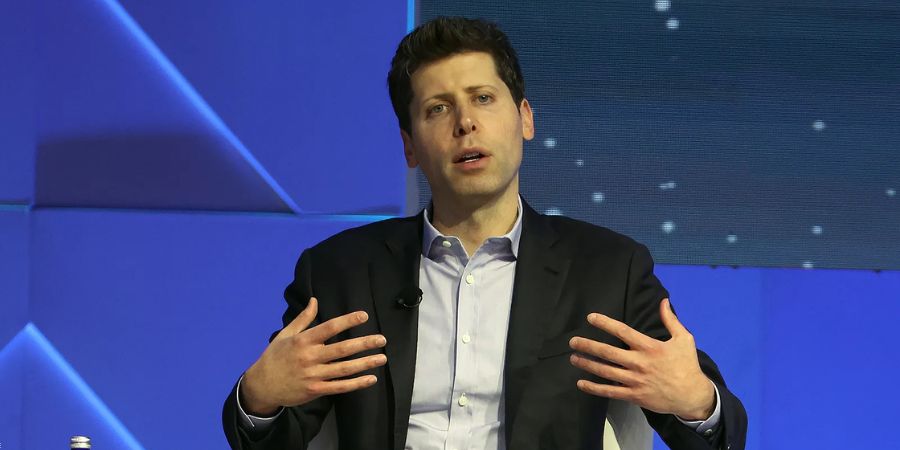
Sam Altman has built a reputation as one of the most influential figures in artificial intelligence and technology. As the CEO of OpenAI, he is closely associated with one of the world’s most valuable technology companies. Yet his personal wealth has been shaped largely through investments outside the company he leads.
That makes the Sam Altman investment philosophy particularly interesting for founders, investors, and entrepreneurs. His approach centers on independent thinking, long-term conviction, and identifying opportunities before they become obvious to everyone else.
What Is Sam Altman’s Investment Philosophy?
At the heart of Altman’s investment approach is a simple idea: the most attractive opportunities are not necessarily the ones receiving the most attention.
Instead of following popular trends, Altman has emphasized looking for companies and technologies where the potential is significant but the broader market has not yet recognized it.
This does not mean automatically investing against popular opinion. True contrarian investing requires independent analysis and the willingness to hold a position when others remain skeptical.
For entrepreneurs, this philosophy offers an important lesson: popularity is not always evidence of opportunity.
The Influence of Paul Graham
Paul Graham, co-founder of Y Combinator, played an important role in Altman’s development as an entrepreneur and investor.
Graham was an early investor in Loopt, the startup Altman founded, and later helped bring Altman into leadership at Y Combinator. His influence extended beyond business decisions, helping Altman develop judgment through experience and close mentorship.
That kind of mentorship can be particularly valuable for entrepreneurs. Rather than simply providing capital, experienced investors can help founders recognize patterns, avoid common mistakes, and make better decisions under uncertainty.
What Did Peter Thiel Teach Sam Altman?
Peter Thiel was another major influence on Altman’s thinking.
Thiel’s investment philosophy is strongly associated with independent thinking and finding opportunities that are overlooked by conventional wisdom. His approach emphasizes creating something genuinely differentiated instead of simply competing in an already crowded market.
Altman’s interpretation is more nuanced than simply betting against the crowd. The objective is to identify situations where an investment appears promising and where the market may be underestimating its potential.
This distinction separates thoughtful contrarian investing from simply being unconventional.
Sam Altman’s Major Investment Strategy
Altman has invested across a large number of technology companies and startups. His portfolio has included businesses such as Reddit, Airbnb, and Stripe, companies that eventually became major technology success stories.
One particularly notable example is Helion, a company working on nuclear fusion technology.
Altman’s early investment in fusion demonstrates the characteristics of his approach. Nuclear fusion had enormous theoretical potential, but commercial success remained uncertain and timelines were difficult to predict.
Rather than focusing only on what was already commercially proven, Altman appears to have considered the possibility that technological progress could eventually unlock a much larger opportunity.
For investors, the lesson is not that every unpopular technology will succeed. Instead, it is that long-term upside can sometimes exist precisely because the market is impatient.
What Founders Can Learn From Altman
The Sam Altman investing philosophy is especially relevant to startup founders.
Entrepreneurs often gravitate toward popular categories because those markets attract investors, talent, media attention, and customers. However, crowded markets also create intense competition.
A founder should therefore ask whether an idea is attractive because it is genuinely valuable or simply because everyone else is excited about it.
Companies that eventually become category leaders often appear unusual in their early stages. Their markets may seem too small, their technology too experimental, or their business model too unconventional.
For more insights into entrepreneurship, innovation, and business leadership, explore Elevate Icons.
The Risk of Contrarian Investing
Contrarian thinking is not automatically successful.
An unpopular idea can remain unpopular because it is simply a bad idea. Investors therefore need strong research, patience, capital discipline, and the ability to distinguish temporary skepticism from fundamental problems.
Altman’s circumstances also gave him advantages that ordinary investors may not have. His access to founders, venture networks, capital, and emerging technologies provided opportunities that are difficult to replicate.
The objective should therefore not be to copy his portfolio. Instead, entrepreneurs and investors can adopt his underlying habit of questioning consensus.
Why Independent Thinking Matters
The most valuable investment opportunities can sometimes appear before the market is ready for them.
That requires investors to tolerate uncertainty and evaluate opportunities based on evidence rather than popularity. It also requires patience because being early can look identical to being wrong for a considerable period.
Altman’s career demonstrates how this mindset can extend beyond investing into entrepreneurship itself. Building ambitious companies often requires pursuing ideas before they become conventional.
Conclusion
The Sam Altman investment philosophy ultimately revolves around independent thinking rather than simply opposing popular opinion.
His experiences with Paul Graham, Peter Thiel, Y Combinator, and numerous technology startups helped shape an approach focused on identifying overlooked opportunities and maintaining conviction when the market remains uncertain.
For founders and investors, the biggest lesson is straightforward: do not confuse popularity with potential.
The strongest opportunities may sometimes be found where the consensus has not yet caught up—but finding them requires research, patience, discipline, and the courage to think independently.