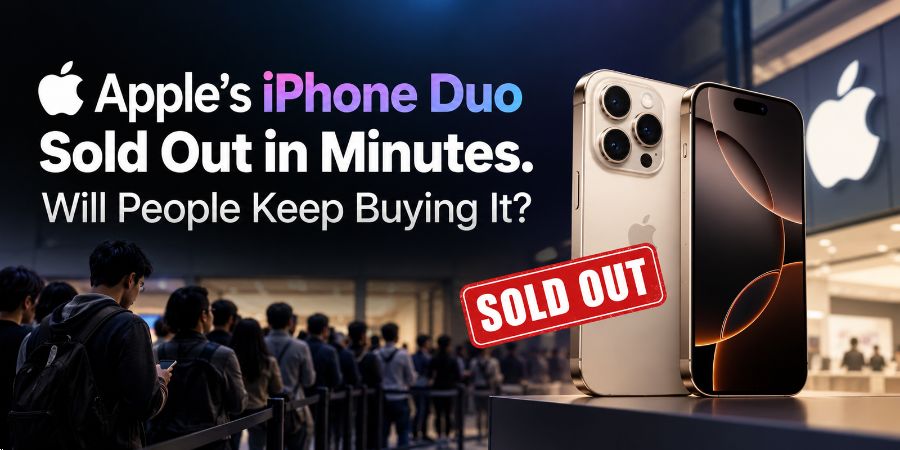
Apple’s first foldable phone, the iPhone Duo, sold out within minutes when preorders opened on October 16, 2026. Delivery estimates now run from the October 23 launch date all the way to late January. At $1,999, it’s Apple’s entry into a market where Samsung and Google have had years to refine their own foldables and win over buyers.
It’s a promising start for a company that has been far more cautious about foldables than its rivals. But a long delivery queue doesn’t tell us how many phones were actually sold, or whether people will still want one once the first wave of eager buyers is done.
A long wait can mean lots of people want the phone, or that Apple didn’t make many, or a bit of both. Apple hasn’t said how many units were available when preorders opened, so the delays shouldn’t be read as a sales number.
Why is Everyone Talking About the iPhone Duo?
Apple has built a phone that aims to give you the pocketability of a regular smartphone and the roomier workspace of a tablet. Instead of simply bolting a folding screen onto its existing lineup, the company is pitching the Duo around multitasking, watching content and using apps in a more flexible way.
What you get:
- Price: $1,999 for the 256GB model in the US.
- Outer display: 5.4 inches, for everyday use when the phone is folded.
- Inner display: 7.6 inches when opened.
- Multitasking: Run two apps side by side, or two windows of the same app.
- Flexible positioning: Prop it open to watch videos, or stand it up in a tent-like position.
- Cameras: Wide and ultra-wide rear cameras, a Center Stage front camera and an under-display FaceTime camera.
Together, these let Apple make the case that folding is a genuinely useful way to use a phone, not just a novelty.
The real question is whether people will find enough everyday value in that flexibility to justify the price.
Is Apple Late to the Foldable Phone Market?
Apple’s timing is a big part of this story. Samsung and Google have spent years on foldables. In that time, shoppers have gotten used to the idea, and manufacturers have improved hinges, software and screens.
Arriving after rivals have proven a category is something Apple does often. Yahoo Finance compares the Duo to the Apple Watch and AirPods, both of which grew into important parts of Apple’s wider ecosystem. The Duo looks like it’s following the same playbook, though how well it performs commercially is still unknown.
The chance here goes beyond selling one more premium phone. A foldable could give people a real reason to upgrade, since it offers something a standard iPhone doesn’t, especially for multitasking, video and getting work done.
There are risks too. The steep price shrinks the pool of likely buyers, and durability, repair costs, battery life and how well apps adapt will all shape whether people see the format as practical day to day.
What Do the iPhone Duo Preorder Delays Actually Tell Us?
The most useful thing about the preorder rush is the gap between how many people wanted the phone and how many Apple could supply. Three things are worth keeping in mind:
- Early demand: The speed at which delivery dates slipped points to real early interest, but Apple hasn’t published a launch-day sales figure.
- Manufacturing capacity: Foldables bring extra engineering and quality-control challenges. Supply limits could explain the delays, but the delivery estimates alone can’t confirm that.
- Demand after launch: Sales over the coming weeks will show whether interest reaches beyond early adopters who don’t mind paying a premium.
This is especially relevant for investors. A long preorder queue might mean the product is appealing, the stock is limited, or both. Later sales, production capacity and customer reactions will paint a clearer picture of how the Duo is really doing.
How Big is the Foldable Phone Market?
Despite all the attention on Apple, foldables are still a small slice of the smartphone world.
Market estimates cited by Yahoo Finance projected that manufacturers would ship 1.25 billion smartphones in 2025, including roughly 20.6 million foldables. That works out to about 1.6% of total shipments, which shows how much room there is to grow if more people start buying them.
Yahoo Finance also reported that Apple expects foldables to make up around 10% of the market by 2029. That suggests the company believes the category can grow well beyond its current niche.
Apple’s challenge is to turn curiosity into a repeat upgrade cycle. A strong first launch can introduce the format to plenty of new people, but lasting growth depends on whether the bigger screen and folding design are worth the extra money.
When Can You Buy the iPhone Duo?
The iPhone Duo reaches stores on October 23, 2026. If you missed the first preorder window, you may be waiting until those later delivery dates, though availability can vary by configuration and location.
A few things are worth watching from here:
- Whether delivery estimates shorten as production ramps up.
- Whether Apple shares signs of steady demand beyond the launch period.
- How the phone holds up in daily use, especially screen durability and software.
- Whether rivals respond with lower prices, better designs or new foldables.
Apple’s first foldable iPhone has grabbed attention fast, but its lasting importance will take more than a quick sellout. If Apple can make folding technology useful, reliable and appealing at scale, it could help push foldables toward the mainstream. For now, the launch shows strong early interest, not a final verdict on where foldable phones are headed.
Frequently Asked Questions
Why did iPhone Duo preorders sell out so quickly?
It points to strong early interest, but Apple hasn’t said how many units it had. Limited launch stock may also have played a part in the delivery delays.
When will the iPhone Duo be available?
It goes on sale in stores on October 23, 2026. Later preorder estimates stretch to late January, and delivery dates may vary by configuration and location.
How much does the iPhone Duo cost?
In the US, it starts at $1,999 for the 256GB version.
What makes Apple’s foldable iPhone different?
It pairs a 5.4-inch outer display with a 7.6-inch foldable inner screen, built for multitasking and flexible ways of viewing.
Author’s Note:
I think Apple’s iPhone Duo launch is an interesting reminder that entering a market late does not always mean losing the opportunity. Apple has watched competitors develop foldable phones for years, and its first device in this category has already attracted considerable attention.
However, I would be careful about treating a preorder sellout as proof of lasting success. When a product costs $1,999, customers will expect more than an impressive design; they will want durability, practical features and a genuinely better everyday experience.
What interests me most is whether Apple can make foldable phones appealing to people who have never considered buying one. That would be a more meaningful achievement than winning over existing Apple enthusiasts. The delivery delays are an encouraging early signal, but limited supply may also be part of the story. For me, the real measure of success will be whether customers continue buying the iPhone Duo months after the launch excitement fades.