When to seek emergency care: Sudden, unexplained shortness of breath, chest pain that worsens with a deep breath, coughing up blood or fainting can indicate a pulmonary embolism. Seek emergency medical care immediately if these symptoms occur. Do not wait for symptoms to improve or attempt to diagnose the condition at home.
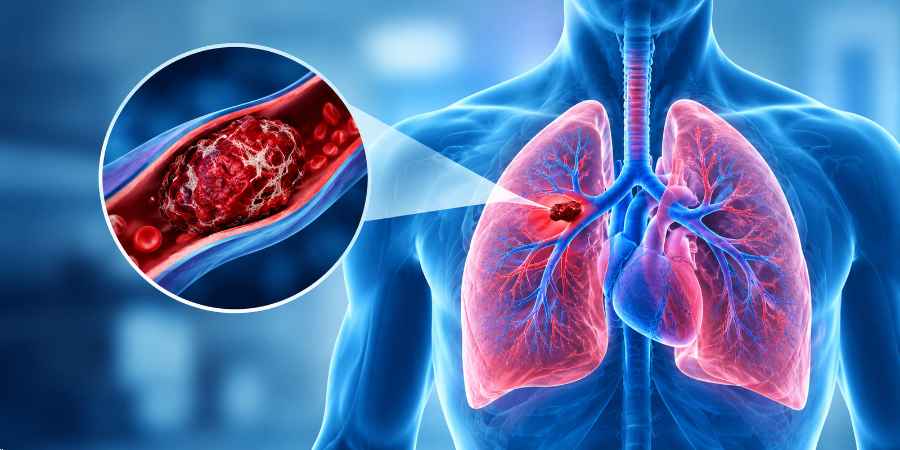
Blood clots in the lungs can develop when a clot, usually originating in a deep vein in the leg, travels through the bloodstream and blocks an artery in the lungs. This condition is known as pulmonary embolism (PE). It can interfere with oxygen delivery and place sudden strain on the heart, making prompt diagnosis and treatment essential.
There are times when there are no clear symptoms initially. Sudden breathing problems and other symptoms can range from severe to relatively mild and progressive. Recognising the risk factors for the condition, keeping an eye out for changes in breathing or chest pain and knowing when to seek emergency treatment are fundamental to prevention and early treatment.
What Are Blood Clots in the Lungs?
The pulmonary arteries carry blood from the heart to the lungs. When a clot blocks one of them, part of the lung receives less blood, and the body takes in oxygen less efficiently.
Most of these clots start as deep vein thrombosis (DVT), usually in the leg or pelvis. If a piece of the clot comes away, it moves through the veins, passes through the right side of the heart and ends up in the lung.
The danger depends on three things: the size of the clot, where it lands, and the condition of the person’s heart and lungs. A small clot may cause very little trouble. A large one can put heavy pressure on the right side of the heart and bring on circulatory collapse.
DVT and PE are linked, yet they are different conditions. Someone can have DVT and feel nothing at all. Someone else can have a PE with no pain or swelling in either leg.
What Causes Blood Clots in the Lungs?
The usual cause is a clot that forms in a deep vein and moves to the lungs. Clots tend to form when blood flow slows, when a vessel wall is damaged, or when the blood itself clots more readily than normal.
The following raise the risk:
- Sitting for many hours on a long journey, resting in bed for a long time, or moving very little after an operation, since blood moves slowly through the leg veins.
- A recent operation, broken bone or other serious injury. Damaged vessels make clotting more likely for a while.
- Cancer, and some of the treatments used for it.
- Pregnancy and the weeks after childbirth, when the blood clots more easily and the growing womb presses on the veins of the pelvis.
- Medicines that contain oestrogen, such as some contraceptive pills and hormone replacement therapy.
- A clot in the past, or a close relative with DVT, PE or an inherited clotting disorder.
- Heart failure, certain inflammatory illnesses, smoking and obesity. These matter most when several are present together.
A person with one or more of these factors will not necessarily develop a PE. A person with none of them is not completely safe either.
What Are the Warning Signs and Symptoms?
What you feel depends on the size of the clot, how much of the artery it blocks and your general health. Some people notice symptoms suddenly. Others notice them building slowly.
Watch for these signs:
- Breathlessness that begins without warning, even while you are sitting still. This is the most important one.
- Chest pain that becomes sharper when you breathe in deeply or cough.
- A fast heartbeat or fast breathing, as the body tries to make up for the lost blood flow.
- Coughing up blood, or mucus streaked with blood. This needs urgent assessment.
- Dizziness or fainting, which can follow a sharp fall in blood pressure.
- Sweating or cold, clammy skin, often together with severe breathing trouble.
- Pain, warmth, tenderness or swelling in one leg, which may mean DVT is the source.
Hardly anyone has all of these. Many people have only one or two. The picture can also look like a heart attack or pneumonia, which makes it easy to misread.
For that reason, a list of symptoms should never be used to decide that you are safe. If you have sudden breathing difficulty, chest pain with no obvious cause, or a faint, get emergency care.
How is a Pulmonary Embolism Diagnosed and Treated?
The doctor starts by asking about your symptoms, your medical history and your risk factors. Those answers decide which tests come next. Because PE can look like other illnesses, a physical examination alone is rarely enough, and scans are often needed.
Tests used to find a clot:
- CT pulmonary angiography (CTPA). A specialised CT scan using contrast dye that shows the arteries of the lungs. It is one of the main tests for PE.
- D-dimer blood test. It measures a substance released when clots break down. In carefully chosen patients, a normal result helps rule a clot out. A raised result does not prove a PE, because other conditions can raise it too.
- Ventilation-perfusion (V/Q) scan. It compares how air moves through the lungs with how blood moves through them. Doctors often use it when a CT scan is unsuitable.
- Leg ultrasound. This looks for DVT in the leg veins.
- Other checks. Oxygen level, heart function and blood pressure help the doctor judge how severe the situation is.
Treatment
Treatment has three goals: stop the clot from growing, reduce the chance of new ones, and keep blood moving safely.
The main treatment is an anticoagulant, commonly called a blood thinner. It does not dissolve the clot. It prevents new clots from forming and stops the existing one from enlarging while the body gradually breaks it down.
In life-threatening cases, doctors may give a thrombolytic medicine that dissolves the clot quickly. The risk is serious bleeding, so it is kept for selected patients. Some patients are treated with a catheter, a thin tube passed through the blood vessels to deliver medicine or to remove or break up the clot. Surgery to remove a clot is rare and is considered only for severe cases where other methods are unsuitable or have failed. People with a serious PE may also need oxygen, circulatory support and close monitoring in hospital.
Anticoagulants carry a risk of bleeding, and they do not suit everyone. The choice of medicine, the dose and the length of treatment depend on the clot, the bleeding risk and any earlier clots. A qualified healthcare professional must guide all of these decisions.
Can Blood Clots in the Lungs Be Prevented?
Not every PE can be prevented. Even so, reducing the chance of DVT lowers the chance that a clot will ever reach the lungs.
On a journey of several hours, stand up and walk around when it is safe to do so. While seated, move your ankles and flex your feet from time to time. After an operation or a stay in hospital, follow the medical team’s advice on getting out of bed and walking, and do not delay it.
Some people need more than movement. Those at higher risk may be given compression stockings, compression devices or preventive anticoagulants under medical supervision. If you have had a clot, have cancer or a clotting disorder, or have recently had surgery, ask your doctor which precautions apply to you.
Do not start aspirin or any blood thinner on your own to prevent a PE. Take it only if a healthcare professional recommends it for your situation.
Staying active helps circulation, but it cannot remove the risk completely. Anyone who has had a clot before, or who has several risk factors, may need a prevention plan made for them personally.
What is Recovery Like After a Pulmonary Embolism?
Recovery differs from one person to the next. It depends on how severe the clot was, how healthy the person was beforehand, and whether any complications follow. Some people get better steadily. Others stay breathless or tired, with less stamina than before, for weeks or even months.
During recovery you should take your anticoagulant exactly as prescribed and attend every follow-up appointment. Ask your doctor when you can safely go back to exercise, work, driving and long journeys. Report any new or worsening breathlessness, chest pain, leg swelling or unusual bleeding without delay. Talk to your doctor about how long the treatment will last before you change anything about your medication.
A minority of people develop a lasting problem called chronic thromboembolic pulmonary hypertension, in which the blood pressure in the lung arteries stays high. For this reason, symptoms that continue or worsen should be examined by a doctor. They should not be dismissed as a normal part of getting better.
Frequently Asked Questions
Can blood clots in the lungs go away on their own?
The body does break down clots over time, but a PE can threaten life while the clot is still in place. Proper medical assessment and treatment are essential. Waiting for a clot to clear without care is dangerous.
Can you have a blood clot in the lung without symptoms?
Yes. Some PEs cause few or no obvious symptoms at first, while others bring sudden or steadily worsening breathing trouble. Feeling well does not reliably prove that there is no clot.
How long does treatment for pulmonary embolism last?
Anticoagulants are usually taken for at least three months. The exact length depends on what caused the clot, how likely another one is, and the risk of bleeding. Some patients need longer. Only the treating doctor should decide when the medicine can stop.
Is chest pain always a sign of a pulmonary embolism?
No. Muscle strain, chest infections and heart conditions can all cause chest pain. Still, sudden pain with no clear cause, especially together with breathlessness, fainting or coughing up blood, needs emergency assessment.
What is the difference between DVT and pulmonary embolism?
DVT is a clot in a deep vein, most often in the leg. A PE is a clot that blocks an artery in the lungs. DVT can lead to PE when part of the clot breaks off and travels through the bloodstream.
Conclusion
A pulmonary embolism is serious, but quick diagnosis and the right treatment improve the outcome a great deal. What matters most is to recognise sudden breathing difficulty or chest pain and to get help immediately. Trying to decide from symptoms alone whether a clot is present is far less important, and it can be risky.
If you suspect a pulmonary embolism, go for emergency care. Do not wait for an appointment, and do not try to treat it at home.
Medical note: This article is for general educational purposes and does not replace professional medical advice, diagnosis or treatment.
Author’s Note:
What concerns me most about blood clots in the lungs is how quickly a seemingly ordinary day can turn into a medical emergency. Breathlessness or chest pain may be easy to dismiss, especially when someone assumes they are simply tired or unwell. Yet, with a condition such as pulmonary embolism, recognising the warning signs and seeking timely medical attention can make a critical difference.
I believe health awareness should encourage people to take unexplained symptoms seriously without creating unnecessary fear. Sometimes, understanding a condition and knowing when to ask for help are among the most important steps we can take to protect our health.