Is the Google Pixel 11 Pro worth buying?
Yes, if you want a smaller flagship with a standout camera and Google’s deepest AI integration yet, but it’s a more incremental upgrade than the price hike suggests. Reviewers largely agree the Pixel 11 Pro is a strong, well-rounded Android phone, especially for people who prefer a compact size over Samsung and Apple’s supersized flagships.
The catch is that most of the improvements are software-driven rather than dramatic hardware leaps, and Google raised the price while trimming base RAM on the entry configuration.
What’s new on the Google Pixel 11 Pro?
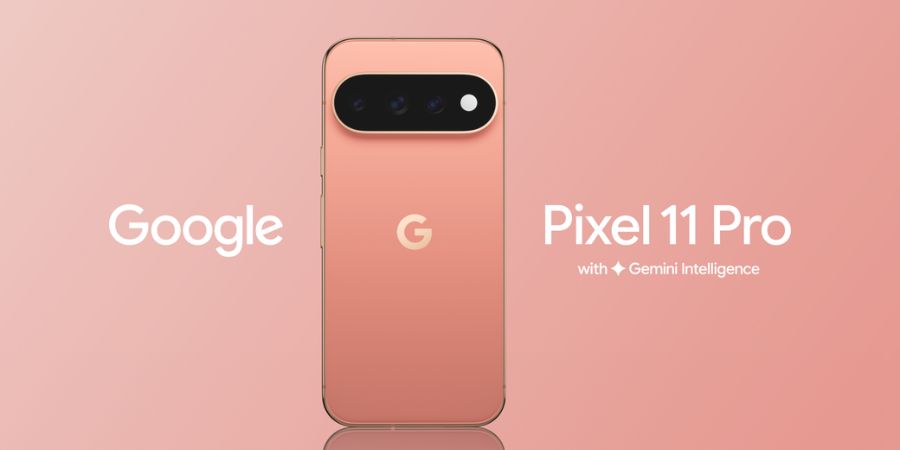
The headline addition is the Tensor G6 chip, Google’s most efficient in-house processor yet, paired with a redesigned camera bar that now stretches edge-to-edge in glass instead of the old crescent-shaped metal housing.
The Pixel 11 Pro also introduces HiLight, a ring of LEDs around the rear camera module that glows when you’re talking to Gemini or lights up for incoming calls. The 6.3-inch Super Actua display got roughly 300 nits brighter, and Google added a more scratch-resistant coating on top.
Camera hardware moved up too, with a 50MP main sensor, a 48MP ultrawide, and a 48MP 5x telephoto lens replacing last year’s setup.
How much does the Pixel 11 Pro cost, and what changed on price?
The Pixel 11 Pro starts at $1,099 for 256GB of storage, up from $999 for the Pixel 10 Pro’s 128GB starting tier last year.
Google doubled the base storage, which softens the blow somewhat, but buyers also need to know that the entry-level model now ships with 12GB of RAM instead of the 16GB that came standard across the whole Pixel 10 Pro line. To get 16GB of RAM this year, you have to step up to the $1,299 tier with 512GB of storage.
Where does the Pixel 11 Pro fall short?
Reviewers point to two consistent weak spots.
First, the Tensor G6 still lags behind Qualcomm’s Snapdragon chips in raw, heavy-duty performance, fine for everyday use and photography, less impressive for demanding mobile games.
Second, HiLight, the new glowing camera-bar feature, has been criticized as more novelty than utility in its first version, since it currently does little beyond signaling calls and Gemini conversations, with no support yet for other notifications or third-party apps. Battery life also stayed roughly flat compared to last year’s model despite the brighter display.
How does Google’s AI actually work on this phone?
Much of what makes the Pixel 11 Pro feel different day to day is not the hardware, it’s Gemini. Features like Magic Capture and the new Rambler dictation tool rely on a mix of on-device processing and cloud-based AI, meaning a meaningful share of what the phone does routes through Google’s data center infrastructure rather than running entirely on the Tensor chip itself.
That’s part of why Google emphasizes the Pixel 11 Pro as a “Gemini device to its core,” the phone is essentially a front end for a much larger AI system sitting in Google’s data center network, which is also what allows features like automatic photo editing and object removal to happen almost instantly.
Google Pixel 11 Pro vs Samsung Galaxy S26 Ultra: which is better?
It depends on what you value most. The Galaxy S26 Ultra wins on raw specs in several categories, a larger 6.9-inch display, a 200MP main camera versus the Pixel’s 50MP, and a Snapdragon chip that outperforms the Tensor G6 in demanding tasks.
The Pixel 11 Pro counters with a brighter screen, a much higher-resolution 42MP front camera versus the S26 Ultra’s 12MP, magnetic Qi2 wireless charging, and Google’s tightly integrated AI camera tools.
Pricing is close too, with the S26 Ultra typically starting lower. For most everyday users, reviewers lean toward the Pixel 11 Pro for its more cohesive software experience; gamers and power users looking for peak benchmark performance tend to favor the S26 Ultra.
What’s the difference between the Pixel 11 Pro and the Pixel 11 Pro Fold?
It’s a different animal entirely from the standard Pro model. It opens to an 8-inch main display with a 6.5-inch cover screen, runs the same Tensor G6 chip, and starts at $1,899 for 256GB, a $100 increase over last year’s Pixel 10 Pro Fold.
It’s thinner and lighter than its predecessor, adds the same HiLight lighting feature, and keeps IP68 water resistance along with magnetic Qi2 charging. Reviewers who tested it called it Google’s best foldable yet, even if its chip isn’t quite powerful enough for intensive mobile gaming. If you want a standard candybar phone, get the Pixel 11 Pro; if you want a tablet-sized screen that folds into your pocket, the Pixel 11 Pro Fold is the one to consider, just budget for the roughly $800 price gap between them.
Can I get the Pixel 11 Pro through T-Mobile?
Yes. T-Mobile has been among the most aggressive carriers with Pixel 11 launch pricing, offering the Pixel 11 Pro for free or heavily discounted with a trade-in on its higher-tier Experience plans, and running promotions that don’t require a trade-in on some plans at all.
Deals vary by plan tier and trade-in condition, so it’s worth comparing T-Mobile’s offer against Google’s own store pricing and other carriers before buying, since the “free” framing typically still leaves you covering taxes, activation fees, and the underlying monthly plan cost.
Conclusion
The Google Pixel 11 Pro is a well-built, camera-forward flagship that leans hard into Gemini and Google’s data center-powered AI tools, with a brighter screen and improved photography to show for it.
It’s not a massive leap over last year’s Pixel 10 Pro, and the higher starting price paired with less base RAM will frustrate some buyers. But for anyone who wants a compact flagship with best-in-class computational photography and deep AI integration, it remains one of the strongest Android phones you can buy in 2026, whether you pick it up outright, through T-Mobile, or step up to the Pixel 11 Pro Fold for a larger folding screen.