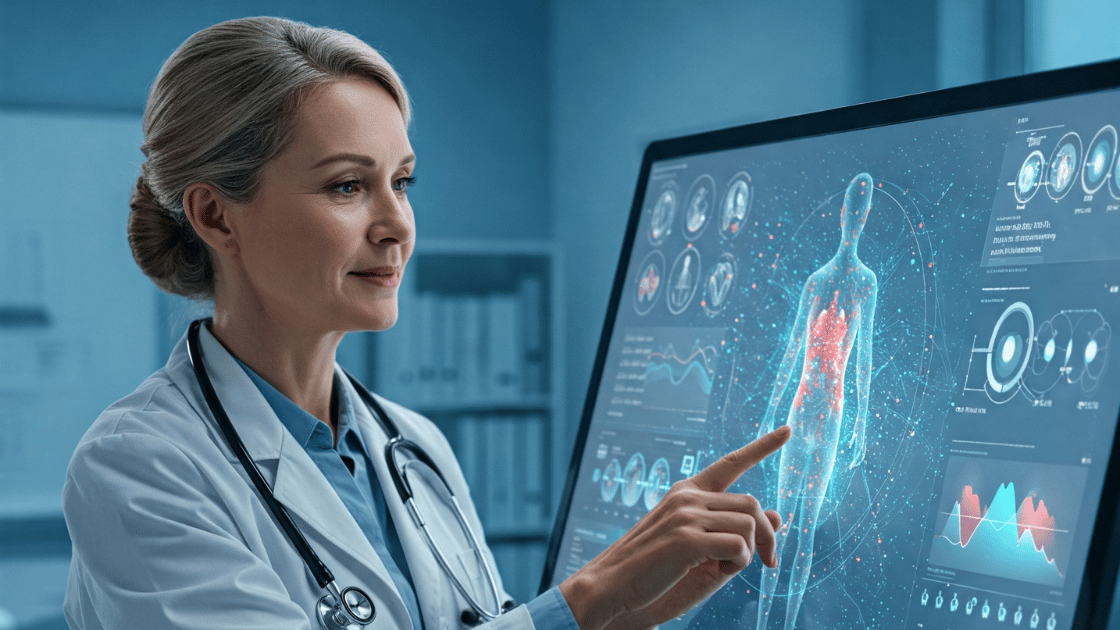
Artificial Intelligence is rapidly transforming the healthcare industry, and AI Diagnostics has emerged as one of the most significant innovations in 2025. Rather than replacing healthcare professionals, AI serves as a powerful second opinion by helping doctors analyze medical data, identify diseases earlier, and make faster, more accurate decisions. As hospitals, clinics, and healthcare providers continue adopting intelligent technologies, AI diagnostics is improving patient outcomes while making healthcare more efficient and accessible.
What Is AI Diagnostics?
AI Diagnostics uses advanced algorithms and machine learning to analyze medical records, laboratory reports, X-rays, CT scans, and MRI images. Instead of spending hours reviewing complex information, doctors can use AI-powered tools to identify unusual patterns within seconds. These systems compare patient data with millions of previous medical cases, providing valuable insights that support clinical decision-making while reducing the chances of diagnostic errors.
To explore how artificial intelligence is transforming industries beyond healthcare, read our article on AI-powered innovation and digital transformation.
Improving Accuracy Through Artificial Intelligence
One of the biggest advantages of AI Diagnostics is its ability to detect diseases at an early stage. In radiology, AI helps identify small abnormalities that may not be immediately visible to the human eye. Early detection allows physicians to begin treatment sooner, significantly improving patient outcomes.
Healthcare organizations are already using AI in several important areas:
- Early breast cancer detection through AI-assisted medical imaging.
- Faster emergency room triage and treatment prioritization.
- Predicting diabetes-related complications using patient history and lifestyle data.
- AI-based screening for diabetic eye disease in community healthcare settings.
These applications demonstrate how AI is becoming an essential clinical support tool instead of replacing medical professionals.
Building Trust in AI-Powered Healthcare
Many patients wonder whether they can trust artificial intelligence with their health. The reality is that AI Diagnostics works alongside doctors rather than making independent medical decisions. Physicians remain responsible for every diagnosis and treatment plan while AI provides additional analysis that strengthens decision-making.
Because AI evaluates medical data objectively, it can help reduce diagnostic errors caused by fatigue or unconscious bias. This combination of human expertise and machine intelligence creates a safer and more reliable healthcare experience for patients.
According to the World Health Organization (WHO), artificial intelligence has the potential to strengthen healthcare systems when developed responsibly and ethically.
Privacy, Security, and Responsible AI
Modern AI Diagnostics platforms are designed with patient privacy in mind. Healthcare providers follow strict regulations to protect sensitive medical information while using secure and encrypted AI systems. Many solutions rely on anonymized data, ensuring that personal identities remain protected while AI continues learning from medical patterns.
Healthcare organizations also perform extensive validation before introducing AI technologies into clinical practice, ensuring that every system meets high standards of safety and reliability.
Expanding Access to Quality Healthcare
One of the most significant advantages of AI Diagnostics is its ability to improve access to quality healthcare services. In many rural and underserved communities, access to experienced specialists can be limited, often resulting in delayed diagnoses and treatment. AI-powered diagnostic tools help bridge this gap by assisting general physicians with advanced clinical insights, allowing patients to receive faster and more accurate medical evaluations.
Telemedicine platforms are also integrating AI diagnostics to support remote consultations. Patients can upload medical reports, diagnostic images, or health information online, enabling AI systems to analyze the data before a doctor reviews the case. This not only reduces waiting times but also helps physicians focus on delivering personalized treatment plans. As healthcare providers continue investing in digital technologies, AI diagnostics is expected to become an essential part of remote healthcare delivery, making quality medical services more accessible and efficient for people around the world.
The Future of AI Diagnostics
The future of healthcare lies in collaboration between doctors and intelligent technology. AI Diagnostics enables faster diagnoses, earlier disease detection, and more personalized treatment recommendations while allowing physicians to focus on patient care and clinical judgment. As AI continues to evolve, it will become an indispensable partner in modern medicine, improving healthcare accessibility and delivering better outcomes for patients around the world.