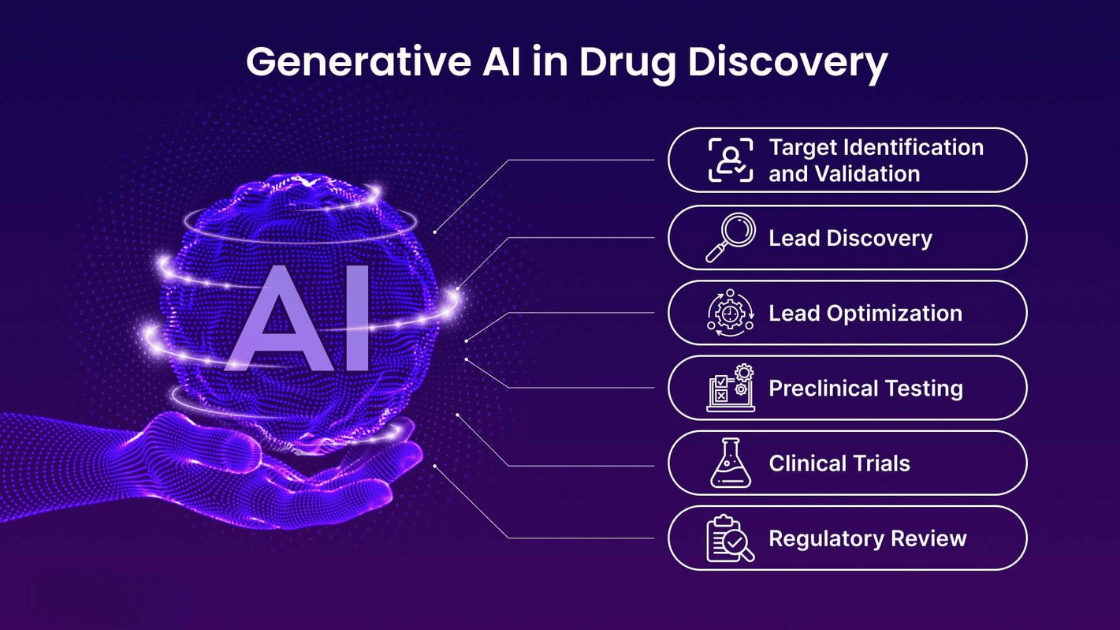
The pharmaceutical industry is entering a new era of innovation, and Generative AI in Drug Discovery is leading the transformation. Developing a new medicine has traditionally been one of the most time-consuming and expensive processes in healthcare, often taking more than a decade and billions of dollars before reaching patients. Today, generative AI is helping researchers accelerate drug discovery, reduce research costs, and identify promising treatments faster than ever before.
Instead of replacing scientists, generative AI works as an intelligent research partner. By analyzing enormous amounts of medical data, chemical structures, and clinical research, AI enables pharmaceutical companies to make faster, data-driven decisions. As healthcare continues embracing digital innovation, Generative AI in Drug Discovery is becoming one of the most important technologies shaping the future of medicine.
Why Drug Discovery Takes So Long
Creating a new medicine involves years of scientific research, laboratory experiments, safety testing, and multiple phases of clinical trials. Researchers must identify potential drug compounds, understand how they interact with the human body, evaluate possible side effects, and ensure they meet strict regulatory standards.
This lengthy process often results in high development costs and delayed access to life-saving treatments. Many promising compounds fail during testing, forcing researchers to begin again with new candidates.
Fortunately, Generative AI in Drug Discovery is changing this traditional approach by helping scientists identify the most promising drug candidates much earlier in the research process.
To explore how artificial intelligence is transforming healthcare beyond pharmaceuticals, read our article on How AI Diagnostics Are Becoming the Doctor’s Second Opinion in 2025.
How Generative AI Accelerates Drug Discovery
Generative AI uses advanced machine learning models to analyze millions of biological datasets, chemical compounds, genetic information, and previous clinical trial results. Rather than manually screening thousands of molecules, researchers can use AI to predict which compounds have the highest probability of becoming safe and effective medicines.
This technology helps pharmaceutical companies:
- Identify promising drug candidates faster.
- Predict how molecules will interact with diseases.
- Reduce unnecessary laboratory testing.
- Improve clinical trial planning.
- Lower research and development costs.
- Accelerate regulatory preparation through better data analysis.
By automating repetitive research tasks, scientists can focus more on innovation and medical breakthroughs.
Supporting Precision Medicine and Rare Disease Research
One of the biggest advantages of Generative AI in Drug Discovery is its ability to support personalized medicine. By analyzing genetic information, lifestyle factors, and medical history, AI can help researchers develop treatments tailored to individual patients instead of relying on one-size-fits-all therapies.
Generative AI is also making research into rare and orphan diseases more practical. Traditionally, these conditions received limited investment because of high research costs and smaller patient populations. AI reduces both the time and expense involved, enabling biotechnology companies to explore treatments that were previously considered financially challenging.
This shift has the potential to improve healthcare equity by expanding treatment options for patients with rare diseases worldwide.
Improving Drug Safety and Research Efficiency
Drug safety remains one of the most critical aspects of pharmaceutical development. Generative AI in Drug Discovery helps researchers predict potential side effects and identify safety concerns before compounds enter expensive clinical trials.
AI-powered simulations can model how drugs interact with proteins, organs, and biological systems, allowing scientists to eliminate weaker candidates early. This reduces wasted resources while increasing the likelihood of successful clinical outcomes.
According to the U.S. Food & Drug Administration (FDA), artificial intelligence continues to support innovation across healthcare and medical product development while maintaining patient safety and regulatory standards.
Human Expertise and AI Working Together
Despite its growing capabilities, generative AI is not replacing scientists, physicians, or pharmaceutical researchers. Instead, it serves as an advanced decision-support system that complements human expertise. Researchers guide the scientific direction, validate AI-generated insights, and make the final decisions throughout the development process.
This collaborative approach allows pharmaceutical companies to innovate more efficiently while maintaining scientific accuracy, ethical standards, and regulatory compliance.
The Future of AI-Powered Drug Discovery
The future of Generative AI in Drug Discovery looks incredibly promising. As AI models become more sophisticated, pharmaceutical companies will be able to develop medicines faster, reduce development costs, improve treatment precision, and respond more rapidly to emerging global health challenges.
Future innovations may include AI-designed personalized therapies, adaptive medicines for evolving diseases, faster vaccine development, and highly efficient clinical trial design. These advancements will strengthen healthcare systems while giving patients quicker access to safer and more effective treatments.
Conclusion
Generative AI in Drug Discovery is revolutionizing pharmaceutical research by accelerating innovation, improving research accuracy, and reducing the time required to develop life-saving medicines. By combining artificial intelligence with human scientific expertise, the pharmaceutical industry can deliver safer, more personalized treatments while addressing some of the world’s most challenging diseases. As AI continues to evolve, it will play an increasingly important role in shaping the future of global healthcare and transforming how new medicines are discovered.